

How to Invest in Solar Projects
Evaluate solar energy investment at the project level: compare equity, debt and operating assets, assess offtake risk, and prepare a financeable deal.

– 7 min read
Evaluate solar energy investment at the project level: compare equity, debt and operating assets, assess offtake risk, and prepare a financeable deal.

Solar energy investment at the project level means funding a specific asset or portfolio and earning returns from power sales, interest, or a sale. Sponsors need to know when a project is ready to raise capital. Investors need evidence that its rights, revenue, construction plan, and downside case support the proposed return. A promising site is only a starting point.
Choose your exposure first: development upside, construction risk, or operating yield. Then identify the electricity buyer, potential grid delays, and your place in the capital stack.
"Global investment in solar PV reached USD 554 billion in 2024." - IRENA and Climate Policy Initiative
The figure includes investment beyond direct project stakes. The International Energy Agency's 2025 investment outlook expected USD 450 billion in solar investment in 2025, including utility-scale and rooftop projects. The estimates come from different sources and use different scopes, so they cannot establish a year-over-year trend.
Buying into a solar project gives you rights to a particular asset's cash flows. Shares in a manufacturer or a renewable energy fund provide a different kind of exposure. For a direct stake, you also need a way to assess execution risk; each route below carries different rights and obligations.
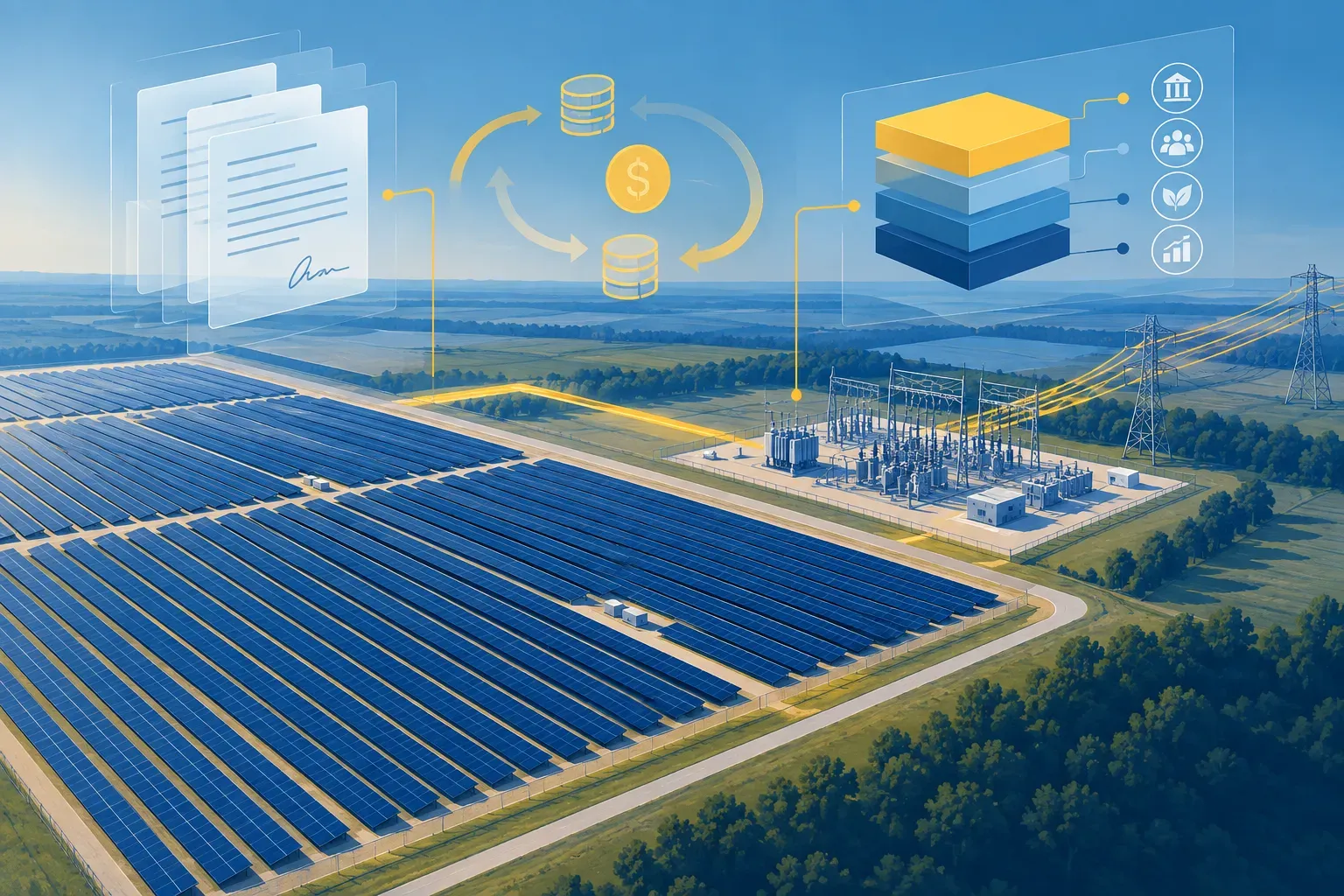
| Route | What the investor funds or acquires | Where repayment or value comes from | Main exposure |
|---|---|---|---|
| Development equity | Early-stage site control, studies, permits, and interconnection work | Value at sale, financial close, or eventual operations | Failure to reach construction readiness |
| Construction or sponsor equity | Equity in a project company or portfolio building the asset | Residual cash after costs and debt service, plus eventual sale value | Cost, schedule, and operating performance |
| Project debt | A loan to the project company, usually secured by project assets and contracts | Scheduled principal and interest from project cash flow | Cash-flow shortfall and recovery if the project defaults |
| Acquisition of an operating asset | Ownership stake in an already commissioned solar project | Distributions and eventual sale proceeds | Production, contract renewal, and long-term asset performance |
| Co-investment or fund participation | A stake alongside a sponsor or through a vehicle holding projects | Distributions according to the vehicle's governing documents | Manager selection, fees, and limited control over individual assets |
Your investment route affects both potential payoff and access to information. Direct equity holders may negotiate governance and sale rights; lenders focus on covenants, security, reserves, and step-in remedies. Fund investors may receive less project-level documentation and have less say over individual assets. Compare the governing documents before comparing projected returns.
An enterprise might buy a project's power under a power purchase agreement (PPA), giving the developer a creditworthy demand anchor. It can also invest alongside the developer if its capital policy allows. The PPA buys electricity rather than project equity, so the approval memo should separate procurement savings and energy-price exposure from investment return.
See energy transition financing for corporates for the wider capital-planning context.
Two solar farm investment opportunities can carry similar forecasts and very different completion risks. Classify each project by the rights and approvals it has secured, rather than the stage named in the pitch.
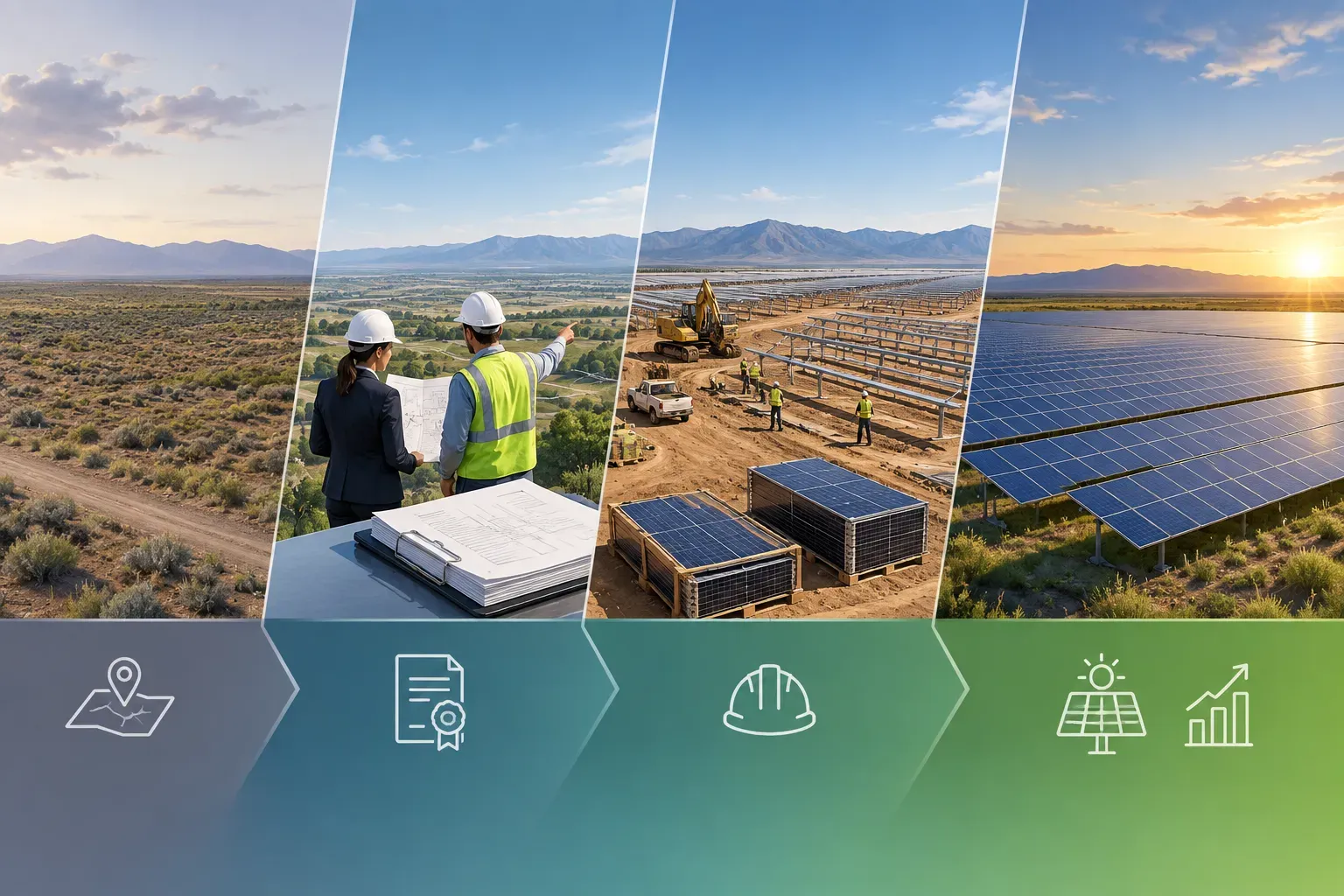
| Stage | Evidence to request | Main unresolved risk | Capital that commonly fits |
|---|---|---|---|
| Early development | Site control, preliminary design, resource work, permitting map, grid application | Rights or approvals may never materialize | Risk-tolerant development equity |
| Ready to build | Executable land rights, permits, grid position, engineering and construction plan, offtake path | Financing, final notices, or counterparties may still hold up closing | Sponsor or strategic equity; construction financing subject to conditions |
| Construction | Signed construction contracts, schedule, budget, insurance, draw process | Delays, change orders, and commissioning failure | Construction debt and equity |
| Operating | Commissioning and performance records, offtake and operating agreements | Production variance, equipment downtime, contract expiry | Long-term debt and infrastructure equity |
“Ready to build” is not a universal legal certification. List the conditions outstanding before the first draw, including permits, interconnection, offtake, and contractor commitments. If one remains open, model the extra time and capital it may require.
Start with the source of revenue. For a PPA, examine contracted volume, the price formula, term, curtailment provisions, and buyer credit. A merchant project takes more power-price risk, and a single asset may have both contracted and merchant periods. Forecast generation is worth little if the buyer cannot pay or the project cannot deliver at the assumed point.
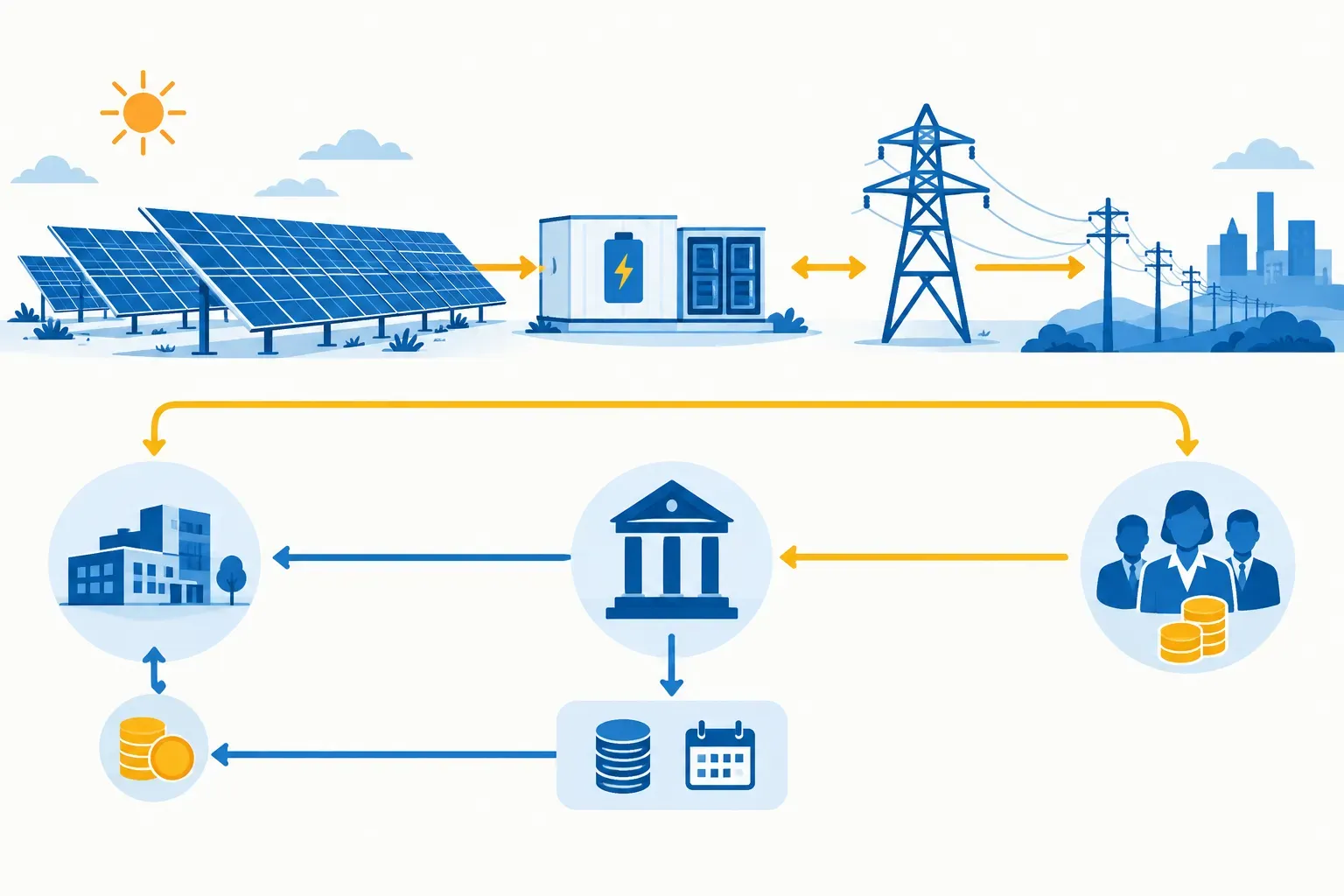
If a proposal pairs solar with battery energy storage, give the battery its own set of assumptions. Charging source, dispatch rights, equipment costs, warranty, and revenue arrangements affect risk and payment timing. To earn revenue for balancing supply on the electricity grid, the project needs a supporting contract or market mechanism.
Build the model from energy produced and delivered through cash available for distribution:
Run a base case and a downside case. In the latter, delay commercial operation, reduce output, lower power prices after contract expiry, raise interest costs, and add unexpected interconnection or construction spending. Check debt service first, then see whether equity still clears the mandate's hurdle without an aggressive exit valuation.
Senior lenders receive payments ahead of common equity, provided the project generates enough cash; enforceable security matters if it does not. Equity bears the first loss from overruns or weak performance and takes the residual upside. Mezzanine or preferred investors may sit between them, though the documents determine their actual priority. The name of an instrument will not tell you its recovery rights.
For a closer look at structural trade-offs, read tax equity versus debt in energy project finance.
Underwrite tax benefits and public support separately. Jurisdiction and deal structure govern eligibility, timing, transferability, and whether the investor can use the benefit. Count an incentive as closing cash only if the project has a documented way to receive or monetize it.
Investors should be able to trace each model assumption to a document, an accountable party, and any outstanding condition. Request:
For a portfolio, provide the documents asset by asset. An aggregate forecast can conceal a single project whose grid date or offtake status holds up the financing.
Pause if a “shovel-ready” project's land option expires before a plausible close, or if the interconnection cost is still a placeholder. A model that assumes PPA revenue without an identified buyer, ignores material curtailment, or funds overruns with unnamed future equity also needs reworking. Each gap changes the capital requirement or leaves a material risk without an owner.
Sponsors improve funding conversations when equity and debt providers can work from the same version-controlled data room. Investors still need source documents for their own credit and investment decisions. Zero Circle's AI-driven project scoring, standardized data, investor matching, and underwriting workflows help sponsors organize readiness and help investors find projects aligned with mandate, geography, and deal size. Legal, technical, and credit diligence still belong in the investment process.
Sponsors can plan outreach using this guide to finding climate project investors.
A solar energy investment earns its place in a portfolio when its stage, offtake, grid position, and capital structure fit the investor's mandate, and the parties have priced and assigned open risks. A high forecast return cannot make up for a missing grid agreement. If you are preparing a project for capital or sourcing direct opportunities, use Zero Circle to organize a reviewable financing conversation and connect with relevant counterparties.
It can be when the project's purchase rights, grid access, revenue contract, costs, and financing terms support returns under a realistic downside case. Early development equity and operating-asset debt have very different risk profiles, so evaluate the specific project rather than solar as one asset class.
For project-level exposure, you can provide development or construction equity, lend to a project company, acquire an operating asset, or join a project investment vehicle. Set your mandate first, then review the project's rights, interconnection, offtake, model, and investor documents before committing capital.