

Energy Finance for Climate Projects
Compare energy finance companies and funding routes for climate projects. Learn when to use project debt, equity or corporate finance and what lenders need.

– 7 min read
Compare energy finance companies and funding routes for climate projects. Learn when to use project debt, equity or corporate finance and what lenders need.

Energy finance companies offer different types of capital for different project risks. A bank may lend against contracted power sales; an infrastructure fund may buy an ownership stake; a public lender may help absorb a risk private capital cannot carry alone. If you are developing an asset or financing an enterprise energy program, identify who can bear the remaining risk and how the project will repay them.
First map the funding need, revenue source, and unfinished development work. A solar project with a signed power purchase agreement (PPA) gives a lender a different case to assess than a battery earning variable market revenue. An enterprise paying for an efficiency upgrade from its operating budget faces a different decision again.
Across the energy industry, some finance companies supply capital; others arrange it, assess renewable energy projects, or connect sponsors with investors. Ask whether a prospective partner will fund the deal or help prepare it for the lender or investor who will.
Capital is flowing into the sector, but each project still needs a workable structure. The International Energy Agency projects:
"Clean energy investment grows to USD 2.2 trillion, almost double that of fossil fuels." - International Energy Agency, World Energy Investment 2026
Capital source or partner |
What it typically provides |
Where it can fit |
Main constraint |
|---|---|---|---|
Commercial banks and specialist lenders |
Debt financing: construction loans, term debt, bridge loans, working capital |
Projects with credible repayment and acceptable security |
Debt must be serviced even if revenues disappoint |
Infrastructure funds and private equity |
Sponsor or project-company equity |
Projects needing risk-bearing capital and a long-term owner |
Ownership and returns are shared |
Strategic investors and offtakers |
Equity, advance commitments, or a purchase contract supporting finance |
Assets linked to an enterprise's supply or decarbonization needs |
Terms can restrict commercial flexibility |
Public lenders, development finance institutions, and green banks |
Loans, guarantees, or credit enhancement, depending on program |
Projects with policy benefits or risks private lenders cannot carry alone |
Eligibility and approval processes vary |
Tax-focused investors and credit buyers |
Capital linked to eligible tax benefits, where law allows |
Qualifying projects in relevant jurisdictions |
Tax rules, project eligibility, and transaction complexity |
Capital advisers and matching platforms |
Packaging, structuring, underwriting support, investor access |
Sponsors needing the right counterparties and a financeable presentation |
They cannot replace the underlying project economics |
Grants and subsidies can fill a funding gap; the remaining investors still need a repayment plan. Larger issuers and portfolios can use green bonds, though the label alone does not establish that an individual project is bankable. Smaller building upgrades may fit equipment leases, energy service agreements, on-bill financing, or commercial property assessed clean energy (C-PACE) better than a stand-alone project loan. Availability depends on the asset and jurisdiction. The EPA's clean energy financing toolkit maps these mechanisms for state and local decision-makers. Across asset classes, including solar, wind, and energy storage, projected cash flow drives the choice of instrument.
A PPA gives a buyer an obligation to purchase output. Lenders use its terms to assess cash flow and repayment: price, term, delivery obligations, buyer credit quality, and default provisions all count.
With corporate finance, the enterprise or sponsor borrows on its broader balance sheet and repays lenders from business-wide cash flows. With project finance, a separate project company commonly owns the asset and borrows against its forecast cash flows and contracts. The loan may give lenders limited or no recourse to the sponsor, subject to guarantees and other negotiated support.
Question |
Corporate finance |
Project finance |
|---|---|---|
Who borrows? |
The operating company or parent |
Usually a dedicated project company |
What supports repayment? |
The company's overall cash flows and credit |
Project revenue, assets, contracts, and reserves |
Who bears a shortfall? |
The company, under its financing obligations |
The project company first; sponsor exposure depends on the documents |
What needs diligence? |
Company financials, business risk, debt capacity |
Site, permits, construction, offtake, operating assumptions, contracts, and counterparties |
When does it fit? |
Smaller upgrades or a strong enterprise able to fund assets directly |
Capital-intensive assets with identifiable long-term cash flows |
Separate-entity financing can protect other sponsor assets and distribute risks among parties. Nonrecourse debt still carries obligations: a lender may require construction support, performance undertakings, reserve accounts, security over project assets, or a parent guarantee for specified risks. For a closer look at instrument choice, see tax equity versus debt in energy project finance.
An enterprise electrifying its vehicle fleet might borrow on its own balance sheet if chargers and vehicles sit within daily operations. A developer building a utility-scale power plant may prefer a project company with its own contracts, equity, and debt. Compare both routes on credit strength, transaction costs, control, and who can manage the risk. Neither is cheaper in every case.
Choose capital for the risks the project faces at each stage, not solely for its quoted price.
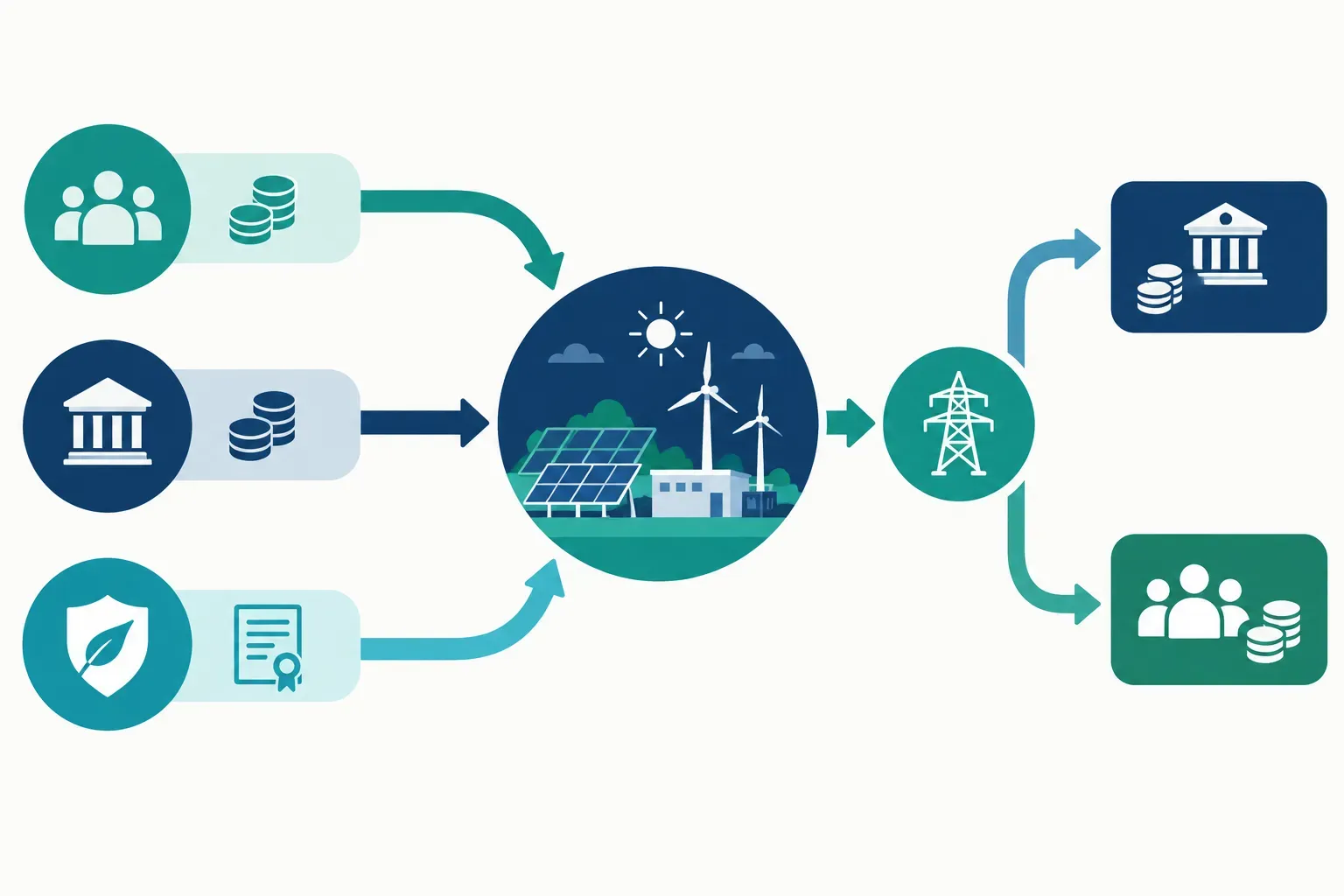
Early money covers site control, studies, design, permits, interconnection work, and negotiation of revenue and construction contracts. Sponsor equity, development equity, grants, or specialized development loans may carry this phase. A commercial lender expecting stable asset cash flow is unlikely to treat an unpermitted proposal like a ready-to-build plant.
Give prospective backers the remaining milestones, their deadlines and costs, and a plan for covering delays.
With material permits and contracts in place, the sponsor can seek construction debt and additional equity. Lenders examine the engineering, procurement, and construction agreement alongside the schedule, contingency, insurance, and completion support. They may release funds against construction milestones. After commissioning, the sponsor may refinance the construction loan or convert it to longer-term debt.
Operating history gives lenders better evidence of output and costs. At that stage, the owner may consider term debt, refinancing, or an equity sale. Lenders still account for merchant exposure, battery dispatch assumptions, fuel or feedstock needs, and the remaining life of revenue contracts.
A public or concessional tranche can absorb a defined risk and bring commercial lenders into a blended-finance deal. Those lenders still need credible construction and repayment assumptions.
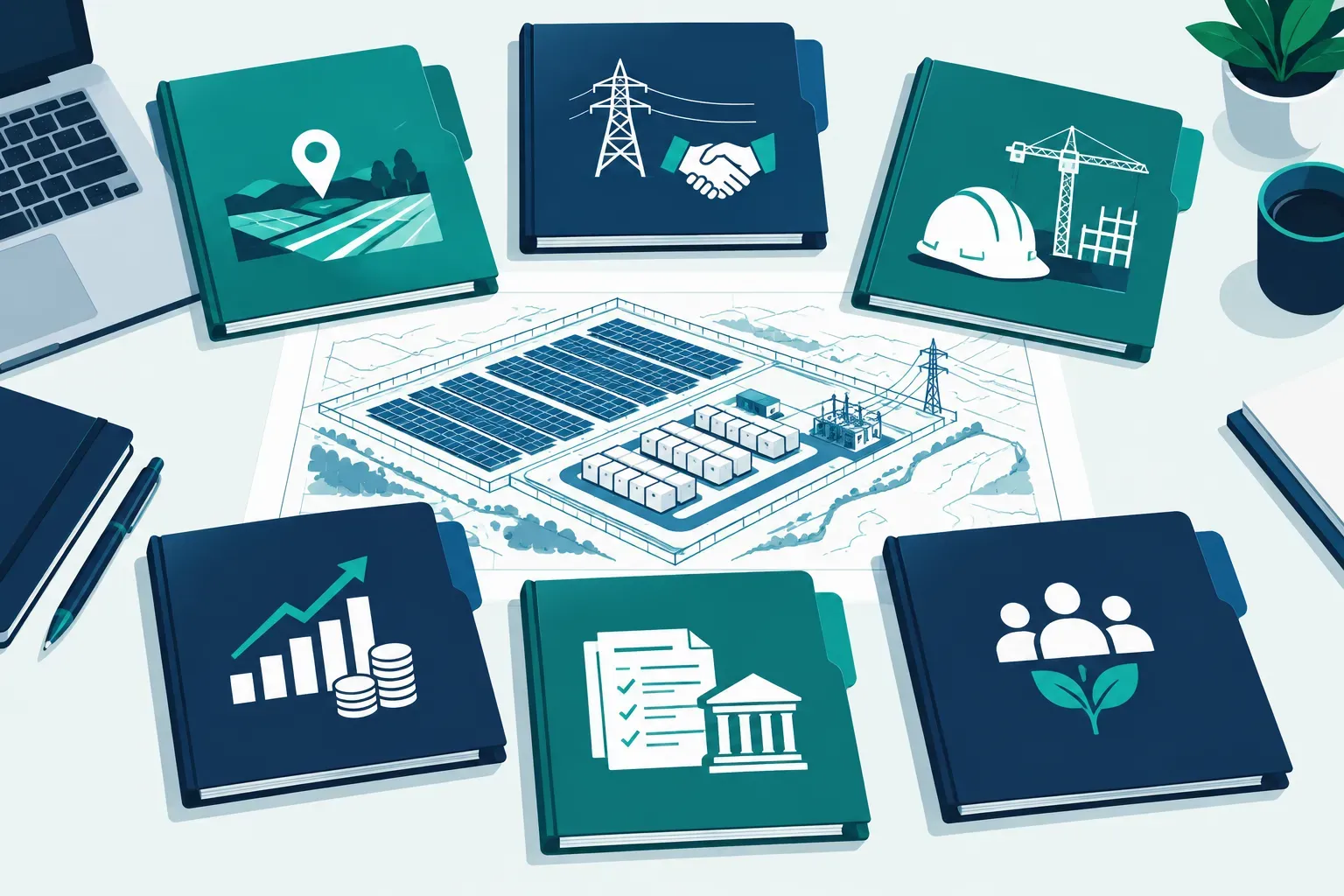
To make a project financeable, show a capital provider the projected returns, how revenue reaches the project, the risks to those payments, and its legal rights if something goes wrong.
Consider two identical battery energy storage projects. One has a contracted capacity payment with a creditworthy buyer; the other expects to earn all revenue from volatile market dispatch. A lender may offer the second project less debt, leaving the sponsor to raise more equity or secure a revenue contract. The role of battery storage in renewable systems is only part of its investment case.
Sponsors can start a useful capital conversation with a short financing brief that answers six questions:
Capital providers still need to conduct independent diligence on a pre-qualified pipeline. Compare deals by stage, geography, technology, capital need, contract coverage, remaining approvals, projected cash flow, and sponsor support. Enterprise teams should decide who will own the asset before choosing finance. Corporate borrowing or a lease may work for an asset the company intends to hold; a PPA or service agreement can put construction and ownership with a third party.
Start outreach with investors whose mandates cover the project type, geography, deal size, stage, and instrument. Send one consistent summary and a controlled set of supporting files. Keep a record of questions and maintain a single current model so no one works from outdated assumptions. If introductions are the sticking point, use a defined process for finding climate project investors.
Zero Circle helps prepare projects and connect them with capital. Its agentic project finance platform standardizes project information, scores fundability against capital-market criteria, and matches projects with investors by mandate, geography, and deal size. Underwriting support and capital structuring guidance sit alongside automated outreach that people review before it goes out.
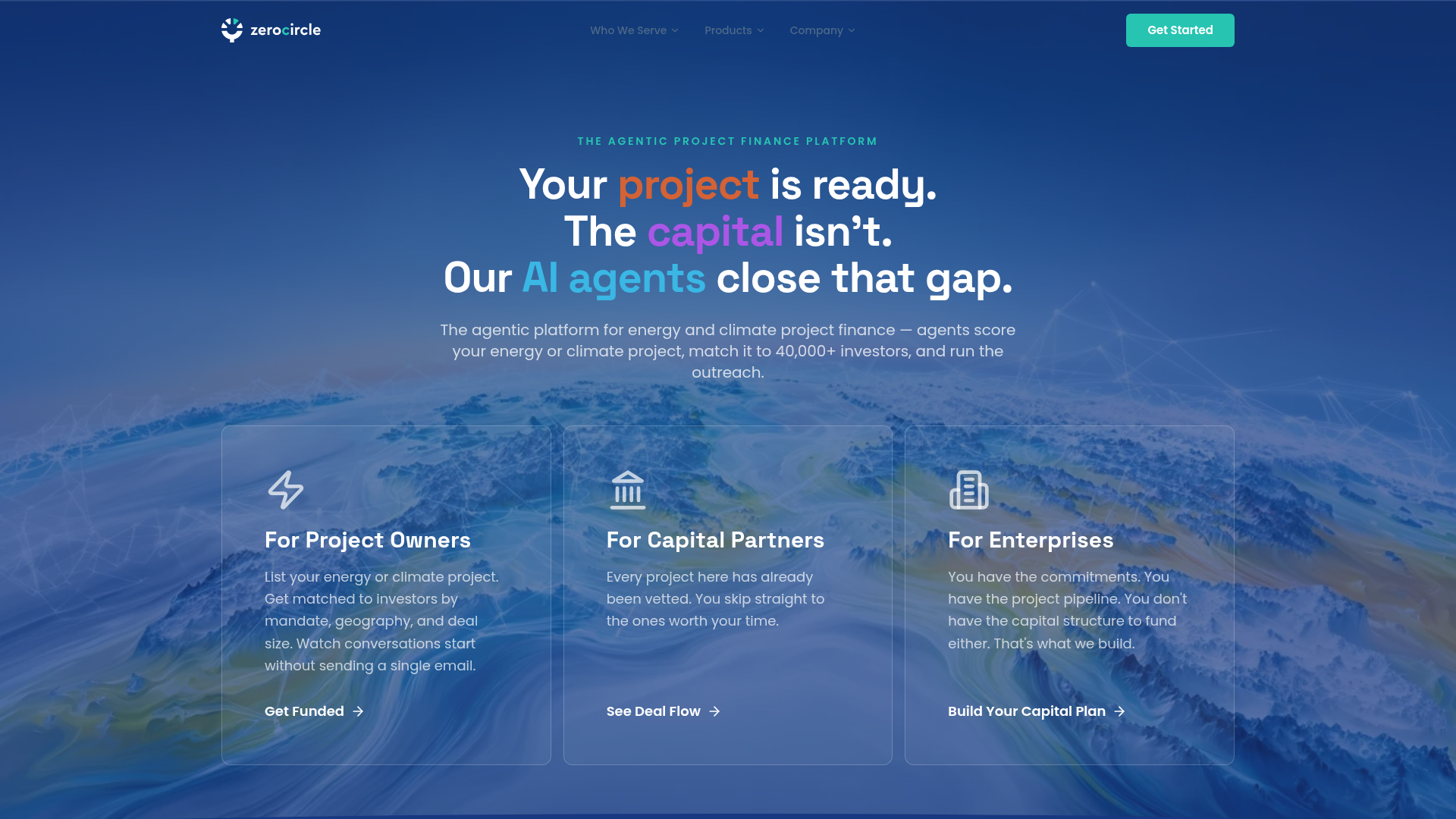
Sponsors can use that workflow to prepare an asset with a plausible financing path for suitable capital partners. Investors receive organized, pre-qualified deal flow. Enterprise teams can use financing strategy and project analysis to choose between owning an asset, contracting for its output, or arranging a separate project financing.
Matching and scoring do not constitute a financing commitment. Investors still make their own credit and investment decisions. Sponsors need to resolve a missing permit or unworkable revenue model before outreach can succeed.
Choose an energy finance company for the risk the asset can support today. Sponsor or development capital can pay for early work; construction capital fits a project with credible delivery plans and contracts; long-term debt relies on a repayment case that holds up in diligence. If the enterprise has stronger credit than the stand-alone asset, corporate finance may be simpler.
If your project is ready for capital conversations, try Zero Circle to organize its financing case, surface gaps, and reach investors whose mandates fit the deal. Bring the underlying contracts and model with you so each investor can assess the opportunity.