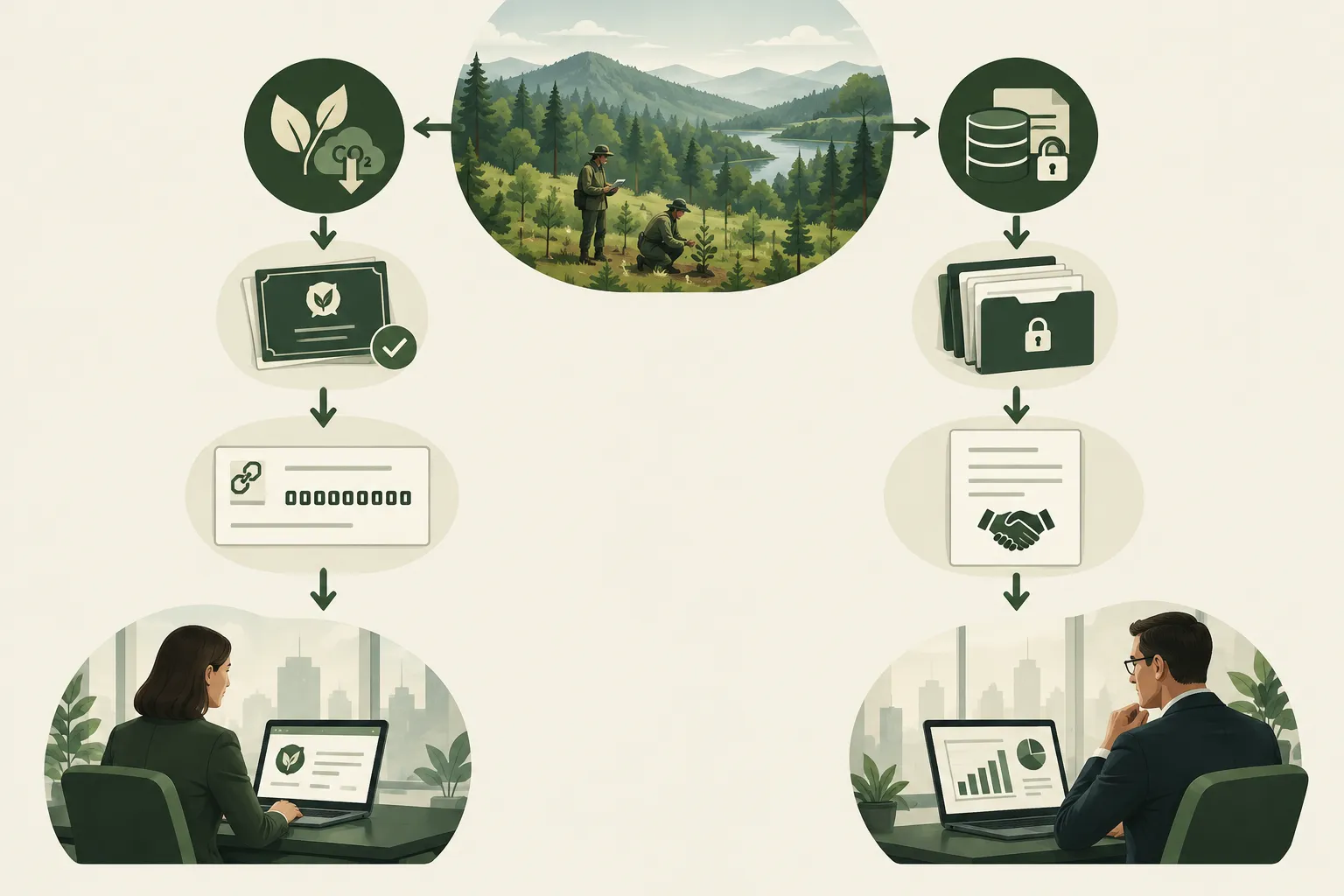
Before choosing a carbon project marketplace, decide whether you need to buy credits or fund the project that produces them. A credit marketplace lets buyers purchase credits, often for retirement. A project-finance marketplace connects developers with capital to build or scale projects that may later generate credits. Developers seeking funding and investors underwriting a project need that financing route, or a platform that supports both. Credit verification and project bankability require separate assessments.
Credit marketplace or project-finance marketplace?
Start with what changes hands. “Marketplace” does not tell you whether a platform funds development or sells an issued environmental asset.
Question
Carbon credit marketplace
Project-finance marketplace
What is the transaction?
Purchase or transfer of credits, including credits that a buyer may retire
Investment, loan, structured capital or another arrangement to fund a project
What does the buyer receive?
Rights to specified credits under the sale terms
Contractual financial rights defined by the financing instrument
What is being assessed?
Credit methodology, issuance, registry status and claims
Sponsor, permits, technical delivery, cash flow, security, contracts and exit or repayment
When does money move?
At spot purchase or under a forward/offtake agreement
According to financing documents and project milestones
Main risk
A credit may fail quality or delivery expectations, especially if sold before issuance
The project may miss construction, revenue or repayment assumptions
A forward purchase of future credits sits between these models. It can bring cash to a developer before issuance. The buyer contracts for future credits rather than equity or a loan claim. If a marketplace offers both routes, each listing should identify the instrument, ownership rights, recourse, delivery obligations and fees. “Invest in a project” does not necessarily mean buying shares.
“Verified project” can mean several things. A marketplace may have checked a sponsor’s identity and documents or assessed commercial readiness. A crediting program may have validated the project design or verified an issuance. Ask who made each decision and on what evidence.
For a credit-producing project, separate the stages:
Project screening: Confirm sponsor identity, site control, project boundary, technology or methodology, and the right to develop and sell the relevant outputs.
Methodology and validation: Examine the applicable crediting rules, baseline, additionality case, monitoring plan and independent validation status, where a crediting program applies.
Implementation and monitoring: Assess permits, equipment or land access, counterparties, measurement responsibilities, and how the project will report deviations.
Verification and issuance: Identify the independent verifier, verification period, registry entry and serial numbers for any credits already issued. Future credits cannot have issued serial numbers yet.
Financial underwriting: Stress-test capital costs, operating costs, revenue contracts, downside scenarios, funding gap and the sponsor’s capacity to deliver.
Project screening and AI-generated scores can help prioritize diligence. Independent credit verification, legal due diligence and the investment committee still have distinct jobs. Ask for the score’s inputs and explanation, the human reviewer’s role, any unconfirmed information and the process for updating the assessment.
The date on a claim matters. Validation assesses a project design; verification assesses monitored outcomes for a period; issuance records credits in a registry. A validated project may have no issued credits. A listing should date each stage, provide the underlying document and separate forecasts from issued units.
Developer checklist: find capital that fits the project
1. Define the financing ask before listing
State the amount needed, use of proceeds, stage, proposed instrument, target closing window and milestones the capital will fund. Show a sources-and-uses schedule that separates development spend, construction funding and working capital. Model expected credit revenue apart from contracted revenue, then show the effect of delayed or reduced issuance.
Ask how many investors can finance this geography, project type, stage, instrument and deal size. A large investor directory may yield few relevant decision-makers.
Developers weighing different capital sources can use clean energy financing options to frame the ask before approaching a platform.
2. Assemble a reviewable data room
Evidence to prepare
Why an investor needs it
Sponsor ownership, track record and entity structure
To identify who controls the project and who bears obligations
Site rights, permits and community or stakeholder agreements
To see whether the project can legally and practically proceed
Engineering plan, schedule, suppliers and operating assumptions
To test cost, timing and performance
Financial model, sources and uses, contracts and sensitivities
To see the repayment or return path and downside exposure
Crediting methodology, monitoring plan and validation or verification records, if applicable
To evaluate carbon claims and potential credit revenue
Proposed term sheet, security and existing obligations
To determine what a new investor would actually receive
Early-stage projects may lack some documents. Mark each item complete, in progress or absent, and explain the milestone and funding needed to close the gap. Flag missing permits and uncontracted revenue assumptions where investors will see them.
3. Inspect matching and financing support
Ask how the marketplace filters investors by mandate, geography, ticket size and stage. Does it offer a standard project profile, data room, underwriting support, capital structuring and introductions to named capital partners? Establish who approves outreach, who sees confidential documents, whether introductions are exclusive and when fees come due.
Zero Circle’s Climate Exchange focuses on verified climate and energy projects. Its project scoring and investor matching sit within a broader project-finance workflow. It suits sponsors who need to organize project information for financing and find investors whose mandates fit the ask. Scoring and matching can help start relevant conversations; funding depends on the investor’s diligence and decision.
4. Make delivery risk visible
Put the dependencies near the top of the listing: land rights, grid connection or offtake, permitting, equipment lead time, methodology approval and pending third-party verification. Name the owner, expected decision point and fallback for each. State whether you need capital before or after those milestones, and what triggers a drawdown, price reset or termination.
If future credit sales support the financing plan, identify volumes already contracted or reserved and those still available. Spell out who pays for monitoring and verification, who owns issued credits and how a forward sale handles a delivery shortfall.
Investor checklist: underwrite the opportunity, not the badge
1. Establish the asset and the rights
First identify the asset: issued credits, future credits, a financing claim against the project or a stake in the sponsor. Then identify your counterparty and the document that sets out your rights. A credit purchase calls for registry records and transfer or retirement mechanics. A project-finance deal calls for the financing agreement, cash waterfall, security, covenants and remedies for failure to deliver.
2. Look through the verification claim
Pin down who assessed the project, when they did it and which standard they used. Where carbon credits drive the investment case, read the validation or verification documents and monitoring records. Separate issued credits from forecasts and units already committed to another buyer. Examine additionality, baseline assumptions, leakage, reversal and double counting where relevant. The badge records a particular assessment; it cannot establish future performance.
3. Test financial resilience and delivery
Rebuild the base case from contracts and cost evidence. Then rerun it with delayed commissioning, lower output, higher capital costs and fewer credits issued later than forecast. Identify who funds a shortfall, whether the offtake contract fixes a price and whether the developer can meet the technical schedule. Projected returns need to survive those tests.
For a forward-credit contract, inspect delivery dates, acceptable replacement credits, shortfall remedies and whether advance payment is refundable. For debt, test covenant headroom and the priority of claims. For equity, test dilution and the circumstances in which a return could actually be distributed. These protections are not interchangeable.
4. Check fit, transparency and conflicts
Compare the deal with your mandate for sector, location, stage, ticket size, tenor, risk and impact. Ask how the platform screens listings, which inputs and limits appear in its score, whether a person reviews submissions and how it earns fees from each side. You need the documents behind material claims and a way to question the sponsor. A standard deal profile speeds initial screening; the project still needs its own underwriting.
Use a staged decision rather than a single “approved” label:
Classify the transaction. Credits, future-credit offtake, debt and equity confer different rights.
Gate on evidence. Does the listing show the project’s status, missing documents and material dependencies?
Match the mandate. Can the investor actually deploy into this geography, stage, instrument and deal size?
Price the downside. Identify who absorbs delays, underdelivery, cost overruns and verification failure.
Advance to full diligence. Agree on document access, responsible contacts, investment process and any platform fee before treating a match as a deal.
Developers need a listing that lets suitable capital providers understand the funding ask and project readiness. Investors need access to the evidence behind the listing’s screening, with verified facts distinguished from projections.
Conclusion
Choose the marketplace for the transaction you intend to make. Credit buyers need traceable units and clear delivery terms. Developers and capital providers need a reviewable project case, an instrument that fits both sides and a realistic allocation of delivery risk. Zero Circle is worth considering for climate and energy projects that need structured project scoring and investor matching alongside financing support. Treat a match as the start of underwriting, never as a funding commitment.