

Impact Investing Platforms for Climate Projects
Choose an impact investing platform for climate projects using practical checks for verification, impact reporting, investor access and eligibility.

– 7 min read
Choose an impact investing platform for climate projects using practical checks for verification, impact reporting, investor access and eligibility.

An impact investing platform for climate projects needs to show what a project is, what evidence backs its claims, who can access it and how financing progresses. If you are developing a project or assessing infrastructure deals, a sustainability label tells you little about those questions. A retail fund may suit portfolio allocation, though it rarely gives you access to an individual solar, storage or resilience project.
Impact investing seeks a financial return alongside an intentional, measurable environmental or social outcome. An impact investment platform lets investors discover, assess or access those opportunities. Funds, private equity and direct project financing instruments put different parties in charge of the investment decision and the asset. An environmental, social and governance (ESG) filter on its own does not establish project-level impact.
"Impact investments are investments made with the intention to generate positive, measurable social or environmental impact alongside a financial return." - Global Impact Investing Network
Model | What the investor accesses | What the sponsor gets | Main selection question |
|---|---|---|---|
Retail impact fund or portfolio | A managed basket of securities or assets | Usually no direct project-financing channel | Does the fund's mandate and reporting reflect the impact you want? |
General-purpose investment marketplace | Listings across sectors and stages | Visibility to a broad investor audience | How are listings screened, and are relevant capital partners actually present? |
Climate project-finance platform | Individual projects or structured deal flow, subject to access rules | Project preparation, qualified introductions or financing workflows | Can it turn project evidence into a decision-ready opportunity for suitable investors? |
Portfolio exposure differs from project allocation. A climate-themed fund rarely lets you select a grid asset or inspect its permits and cash-flow assumptions. A marketplace listing, meanwhile, does not establish that anyone has underwritten the transaction.
A family office choosing a managed strategy needs different controls from a lender assessing battery storage. A project sponsor needs to get documents in front of investors with a suitable mandate. An enterprise planning energy upgrades may need help structuring its financing before it approaches investors.
Decide whether you need portfolio allocation, project discovery, access to a transaction or help preparing a project for financing. Then compare platforms built for that job.
The International Energy Agency estimated that $2.2 trillion would go to clean technologies, including renewables, grids and storage, in 2025. That estimate covers multiple categories, not a set of projects available on a marketplace. Individual projects still have to clear financial and environmental hurdles before investors can put capital toward climate-change mitigation and sustainable development.
Put each platform through the same questions. A good dashboard will not help if an investment committee cannot examine the underlying evidence.
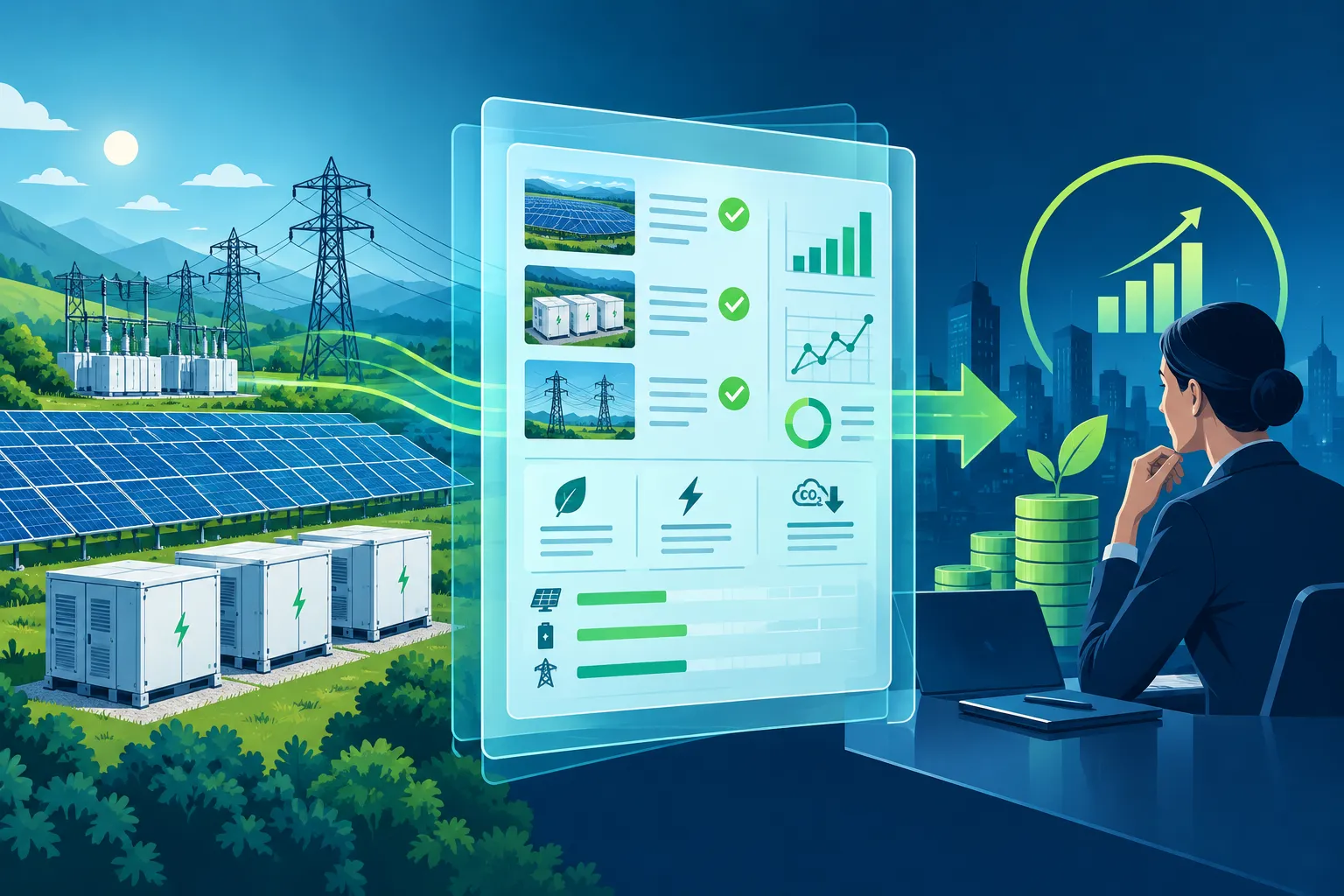
“Verified project” might mean an identity check, or it might include a review of permits, contracts and forecasts. Ask what the platform checks before listing, who reviews the sponsor's evidence and whether investors can see exceptions. You should be able to find the scope, reviewer and date of a verification.
An energy project may need evidence of site control, interconnection status, offtake terms, equipment assumptions, construction schedule and permits. Requirements vary by technology and jurisdiction. The platform should flag missing items instead of endorsing an incomplete application. Investors still need legal, technical, environmental and credit diligence after screening.
Standard fields help you compare projects. A lender or equity investor also needs the underlying documents and assumptions: look for a data room, version history, project stage and an explanation of any score. Without the inputs, a score can conceal risks that decide whether financing closes.
Sponsors should be able to see readiness gaps and assemble a coherent financing package from their files. Capital partners need to challenge forecasts, request missing contracts and trace revisions back to their sources. If the financing structure itself is unfamiliar, start with renewable energy project finance basics.
Before construction, an emissions estimate is a forecast. A credible report names its baseline, calculation method, reporting period and data owner. For climate assets, generation or storage performance can sit alongside the environmental benefits those results support. If a project claims avoided emissions or protection of natural resources, ask for the without-project scenario and the owner of the underlying data.
Find out how the platform records revised forecasts, delays and missed targets. Investors should be able to compare the original investment thesis with later results without mistaking projected benefits for delivered ones. An ESG screen on a portfolio cannot tell you whether one project delivered its promised outcome.
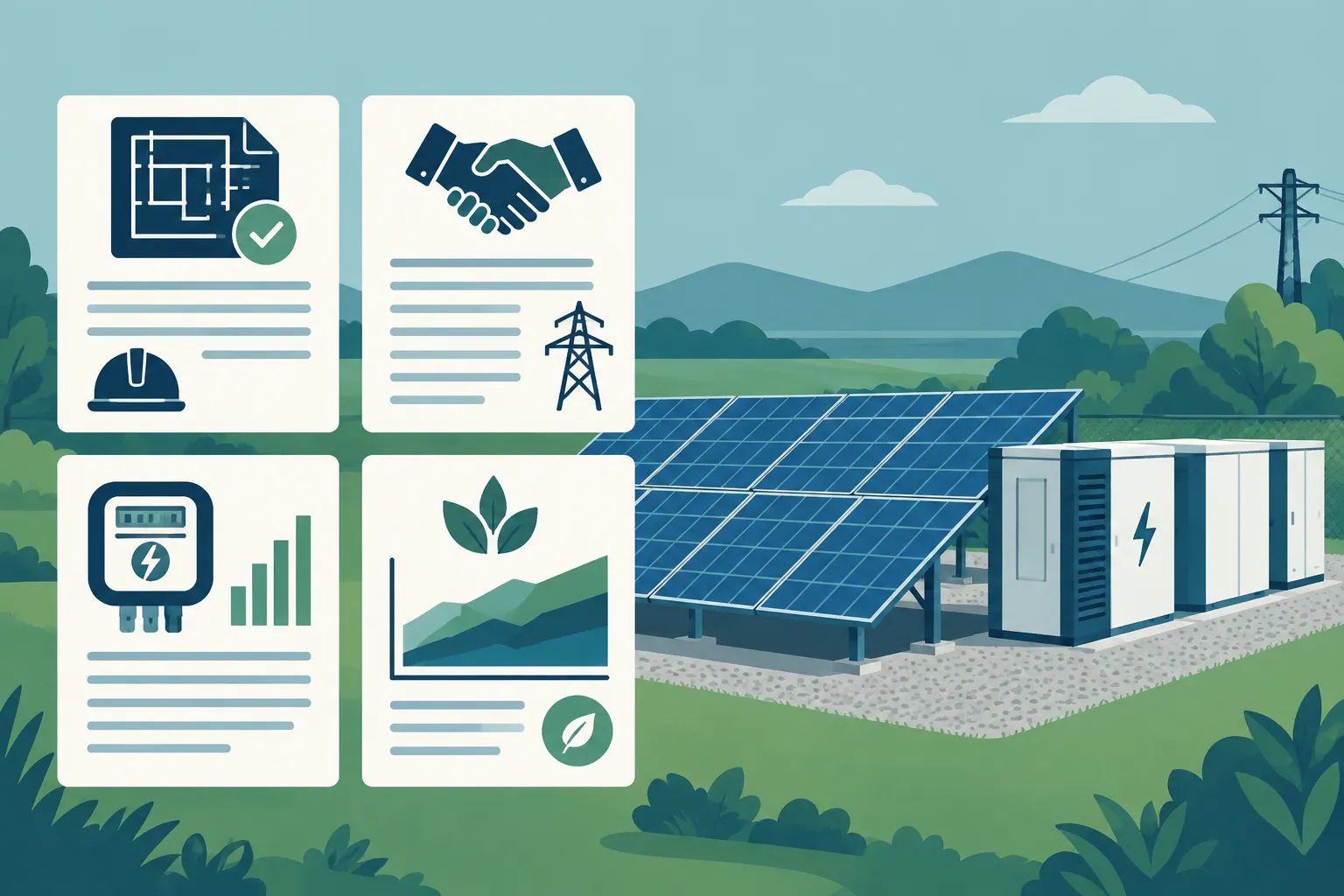
For a sponsor, useful access means introductions to impact investors and other capital partners whose mandates fit the technology, stage, location and financing structure. For investors, it means enough consistent information to decide whether a project merits diligence. An investment manager allocating across capital markets may want portfolio-level exposure; a long-term infrastructure lender may need project contracts and a repayment model.
Find out whether listings are public, restricted, invitation-based or shared after qualification, and who approves contact. For more on identifying a capital provider with the right mandate, read how to find climate project investors. Assess the access process here rather than choosing by a minimum investment amount.
Viewing a project profile does not grant investment rights. The security, investor category, jurisdiction and offering route determine eligibility. The platform should explain the steps from browsing and introduction through diligence and subscription. It should name whoever structures the transaction, receives funds and handles investor checks.
Project-finance platforms and retail brokerages offer different forms of access. Even a published project opportunity may be limited to eligible investors. Project stage also affects what is available, as explained in renewable energy investment opportunities.
Ask how staff handle follow-up, document requests, approval gates and revised financing terms. Automated matching can narrow a long investor list; the team should record its reasons for each match and review outreach before sending it. Sponsors and investors both need current information and a clear next action.
Pin down the platform's role and economics: discovery service, adviser, manager, intermediary or a combination. Ask who pays fees, for which services and at what stage. The interface alone will not tell you.
The same project record has to support different decisions:
User | Decision to make | Minimum useful evidence |
|---|---|---|
Project owner | Is this a workable route to relevant capital? | Required documents, project-readiness feedback, matching rationale, control over outreach and process ownership |
Capital partner | Is this opportunity worth deeper diligence? | Project stage, economics and assumptions, material risks, document access, impact methodology and clear contact rights |
Enterprise energy team | Is the proposed investment financeable within its energy plan? | Project scope, financing structure options, operational assumptions and accountable reporting |
Consider a storage developer with site rights and a preliminary revenue model but no settled interconnection timeline. The platform should mark that timeline as unresolved, preserve the version of the model an investor saw and route the opportunity to investors comfortable with that stage. Nobody should call the project fully financed or present projected emissions benefits as operational results.
Request a sample project record and impact report. If you cannot spot assumptions, gaps and revisions in them, more listings will not help you assess a deal.
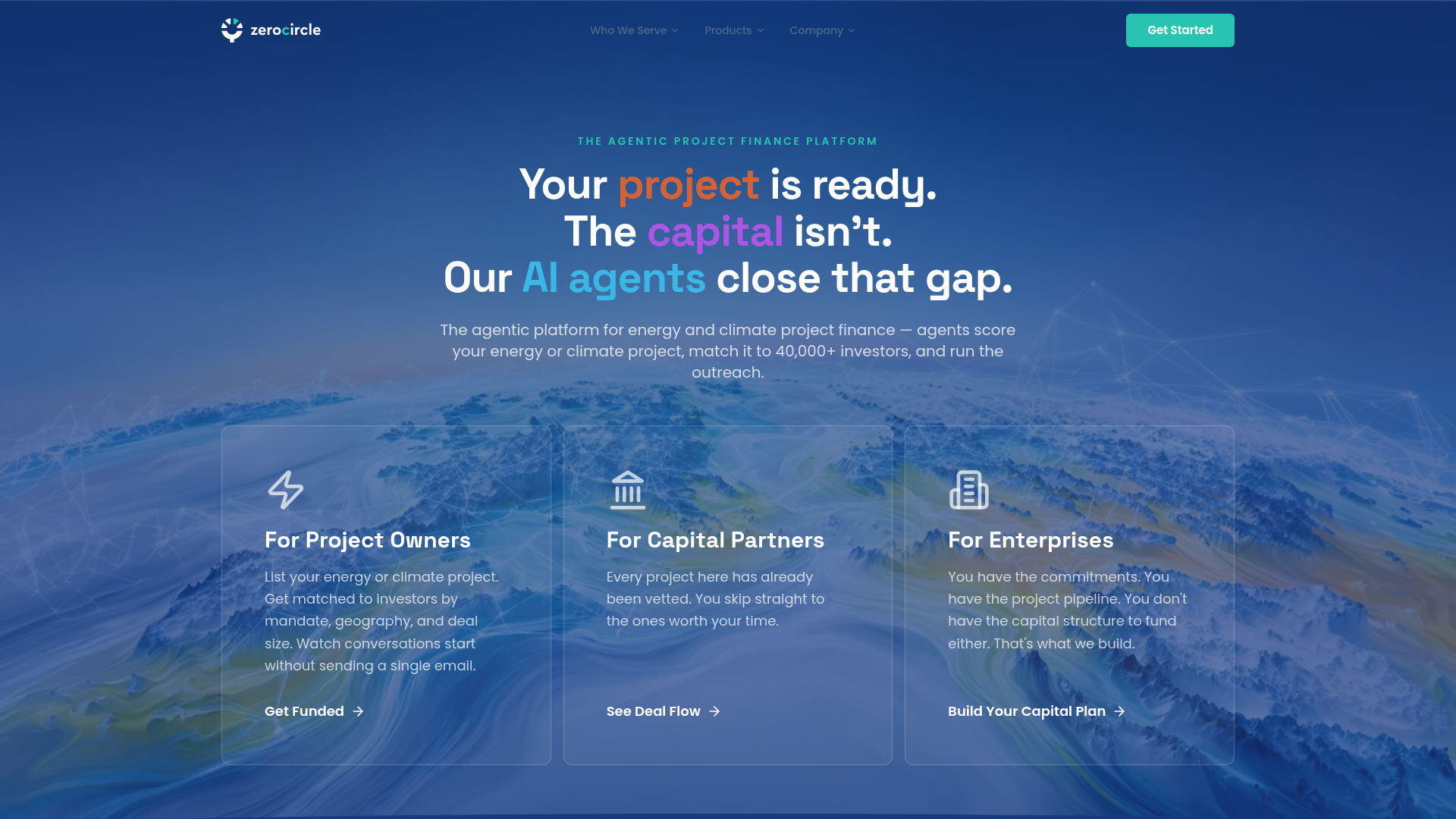
Zero Circle focuses on energy and climate infrastructure finance. Its Climate Exchange connects verified projects with investors. The broader platform scores projects, standardizes information, matches investor mandates, supports underwriting and provides capital-structuring guidance. People review outreach before it goes out. Sponsors can use those steps to present a project to capital providers, while investors receive organized climate-project deal flow.
Zero Circle is geared toward project financing, so someone seeking a diversified, readily traded retail fund needs another product. Its project scores and matches do not guarantee eligibility, funding, return or independently verified impact. Apply the same diligence questions to Zero Circle that you would to any project-finance platform.
For a portfolio allocation, examine the fund's holdings, mandate and reporting. For a specific infrastructure deal, choose an impact investing platform where you can examine project evidence, access rules and post-investment measurement. A listing without a clear verification scope or path to diligence gives you too little to make a financing decision.
If your bottleneck lies between project readiness and relevant capital, Zero Circle is worth considering for its standardized deal information, explainable scoring, matched outreach and structuring support. Bring a project or investor mandate to the conversation so you can assess how that workflow handles the evidence you need.
Yes. Investors can pursue financial returns alongside intentional, measurable environmental or social outcomes through funds and project-level opportunities. For climate infrastructure, the practical distinction is whether a platform provides portfolio exposure or the documents and access needed to assess an individual project.
It depends on the investment's risk, expected return, fees and the quality of its impact evidence. A climate label cannot establish financial suitability or prove that a project will deliver its forecast outcome. Compare the underlying deal or fund documents with your mandate before deciding.
