
Renewable Energy for Data Centers
Plan renewable energy data centers with clear choices on PPAs, on-site power, storage, hourly matching, grid access and project financing.

– 7 min read
Plan renewable energy data centers with clear choices on PPAs, on-site power, storage, hourly matching, grid access and project financing.

Renewable energy data centers need a grid connection, supply contracts and a plan for hours when wind and solar fall short. A facility might hold enough renewable certificates to cover a year's electricity use yet draw grid power each night. Start with an hourly load forecast, then make the contracts clear about who bears delays and variable output.
Artificial intelligence can raise electricity demand faster than solar and wind projects can connect to the grid. If the data center opens first, the operator needs bridge power. The generation and storage developers also need a plan that investors can fund.
The International Energy Agency estimates that data centers used 415 TWh of electricity worldwide in 2024. Its base case projects around 945 TWh by 2030.
"Data centre electricity consumption is set to more than double to around 945 TWh by 2030." - International Energy Agency
Estimate electricity needs by hour, site and commissioning phase. An annual megawatt-hour total hides the evening shortfall under a solar PPA, as well as the risk that a new AI hall comes online before its wind farm.
Build demand cases for contracted capacity, expected utilization and rapid growth. Document the ramp dates, hourly load and grid import limit for each. Identify workloads you can shift without breaking service commitments; keep the rest in the firm-demand category.
Ask the utility how much capacity the site can obtain and when. A renewable contract elsewhere on the grid cannot provide a local connection or create transmission capacity. Treat the utility's capacity and energization schedule as a gate for procurement and site planning.
Most facilities need several supply instruments. Compare what each one delivers and where your financing team will face risk.
Route |
What the operator receives |
Main limitation |
Finance and diligence priority |
|---|---|---|---|
Grid supply with renewable certificates |
Grid service plus documented renewable attributes |
Annual attributes do not ensure clean power in every operating hour |
Certificate ownership, vintage, geography and retirement |
Off-site physical PPA |
Contracted generation with a delivery arrangement through the grid |
Output varies and network charges and balancing still matter |
Delivery point, shape, basis risk and credit support |
Virtual PPA |
Financial settlement against a renewable project's output, often with associated attributes |
The facility continues buying its own physical electricity |
Settlement index, price volatility, accounting and counterparty risk |
On-site solar or wind |
Generation near or at the load |
Land, roof, resource and output timing limit coverage |
Site rights, permits, interconnection and operating responsibility |
Battery storage |
Shifting energy in time and potentially managing peaks |
It consumes energy; it is not a renewable generator |
Dispatch model, revenue assumptions, degradation and warranties |
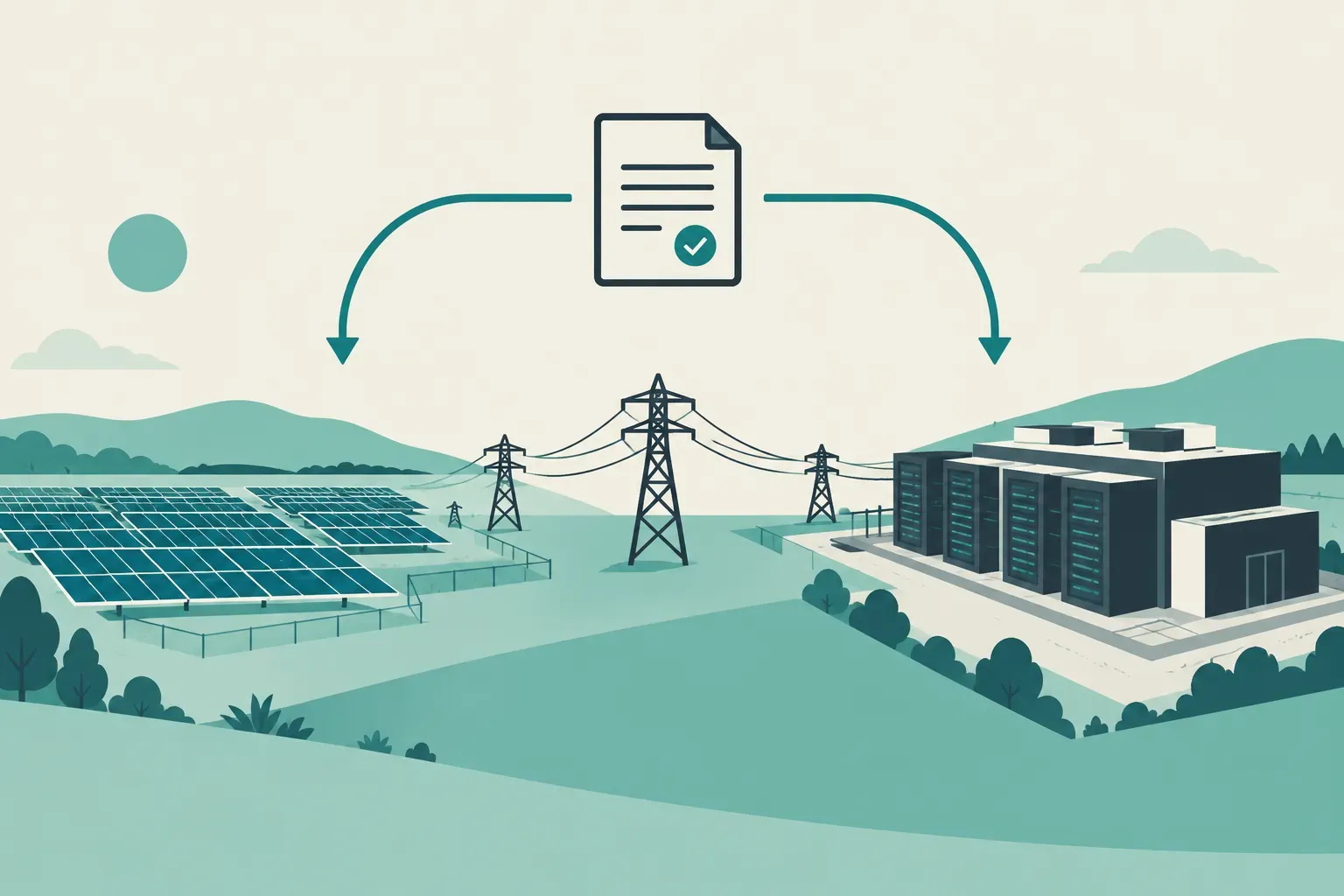
A PPA gives a generator and buyer agreed commercial terms for new supply. A physical PPA sets out delivery, sometimes through an intermediary supplier. A virtual PPA settles financially against a project's output while the data center buys its electricity separately. Wind and solar output still varies under either contract.
Compare contracted generation with the facility's hourly load. Price uncovered hours, surplus power, network and balancing charges, curtailment, and any difference between the project's settlement node and the facility's purchase point. If the PPA starts after the data center opens, budget for bridge supply.
A long-term contract with a creditworthy buyer gives a developer more predictable revenue. Lenders still examine the buyer's credit, termination rights, curtailment terms, grid access and exposure to merchant prices.
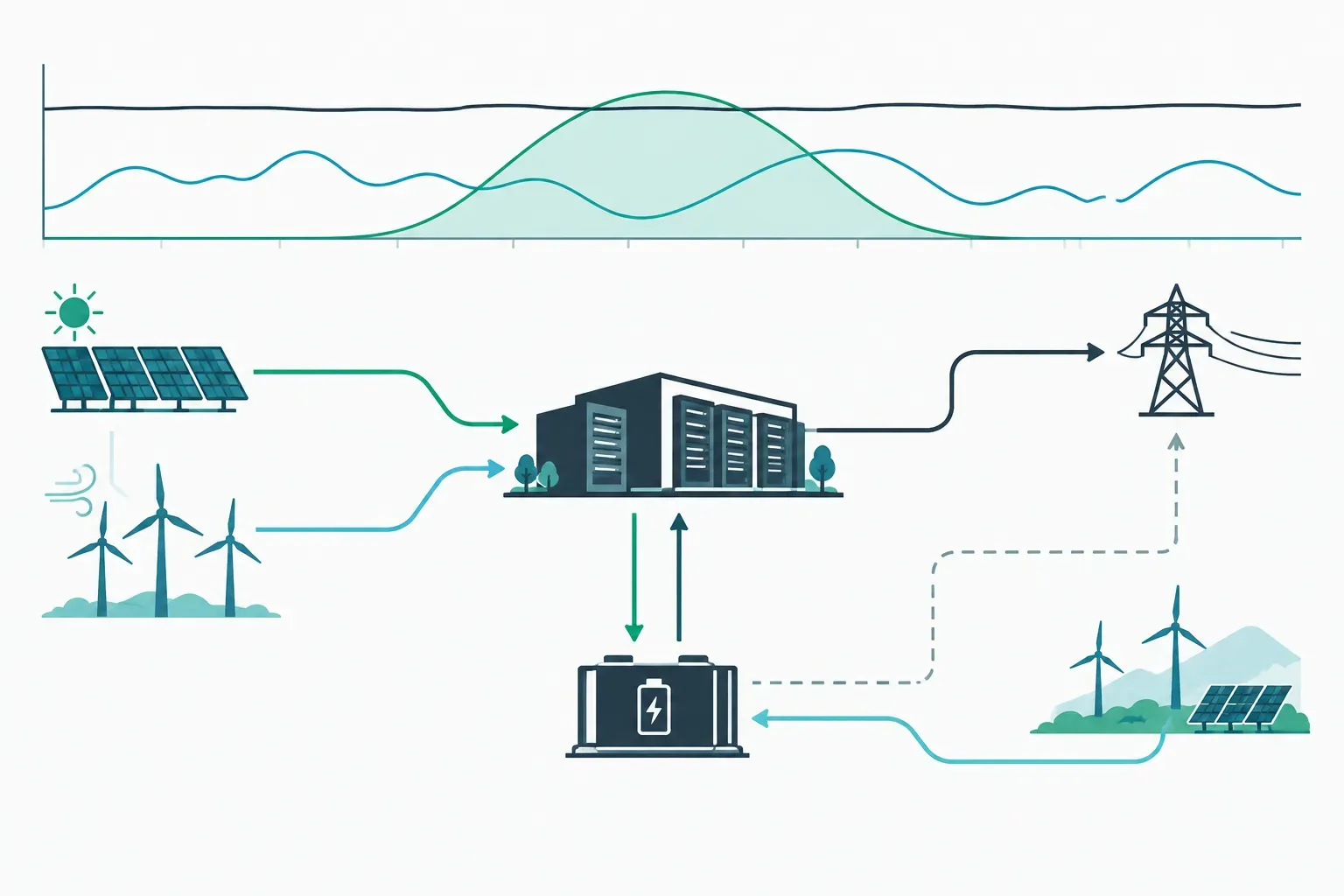
On-site solar cuts grid purchases when it generates, but land, roof space and sunlight limit its share of supply. A battery can move some output into later hours or reduce peak imports. Its value depends on the charging source, duration, cycling and grid rules. Use a modeled reliability case before counting either asset as firm supply.
The operator can finance behind-the-meter assets separately or include them in an energy services agreement. Set out who owns the equipment, controls dispatch, receives renewable attributes and pays for replacements. Model battery storage and renewable generation together. A battery that charges from a fossil-heavy grid does not turn that power renewable when it discharges.
An annual procurement claim, an hourly clean-power claim and a reliability claim require different evidence. Certificate retirements support the first. Timestamped generation and load records support the second. The third calls for a separate assessment of grid service and backup.
Annual matching compares megawatt-hours over a year and usually relies on energy attribute certificates. It does not show whether the grid burned fossil fuels while the data center was running. Hourly matching compares clean generation or storage-backed output with power consumption in the same hours, ideally within a deliverable grid area. Direct supply describes an electrical and contractual delivery pathway, but a dedicated solar plant still stops generating at night. Reliability needs grid service and backup.
Objective |
Evidence to request |
What remains unresolved |
|---|---|---|
Annual renewable procurement |
Metered consumption, eligible certificates and retirement records |
Hour-by-hour fossil generation on the grid |
Hourly clean-energy matching |
Timestamped load and generation data, attribute ownership, and storage charging records |
Local deliverability and outages |
Physical delivery |
Metering, utility arrangements and delivery terms |
Intermittency and backup |
To cut exposure to grid emissions during operating hours, procure deliverable clean power and measure its overlap with load. An off-site PPA can support new generation across a wider market, even if it leaves some hours uncovered. State the result precisely; “100% powered by renewables” suggests a level of physical coverage an annual certificate claim cannot establish.
Before seeking funding, a developer needs site rights, a path to grid connection, draft contracts, a budget and a revenue model that holds up under delays or lower output. An offtake target alone gives investors too little to price.
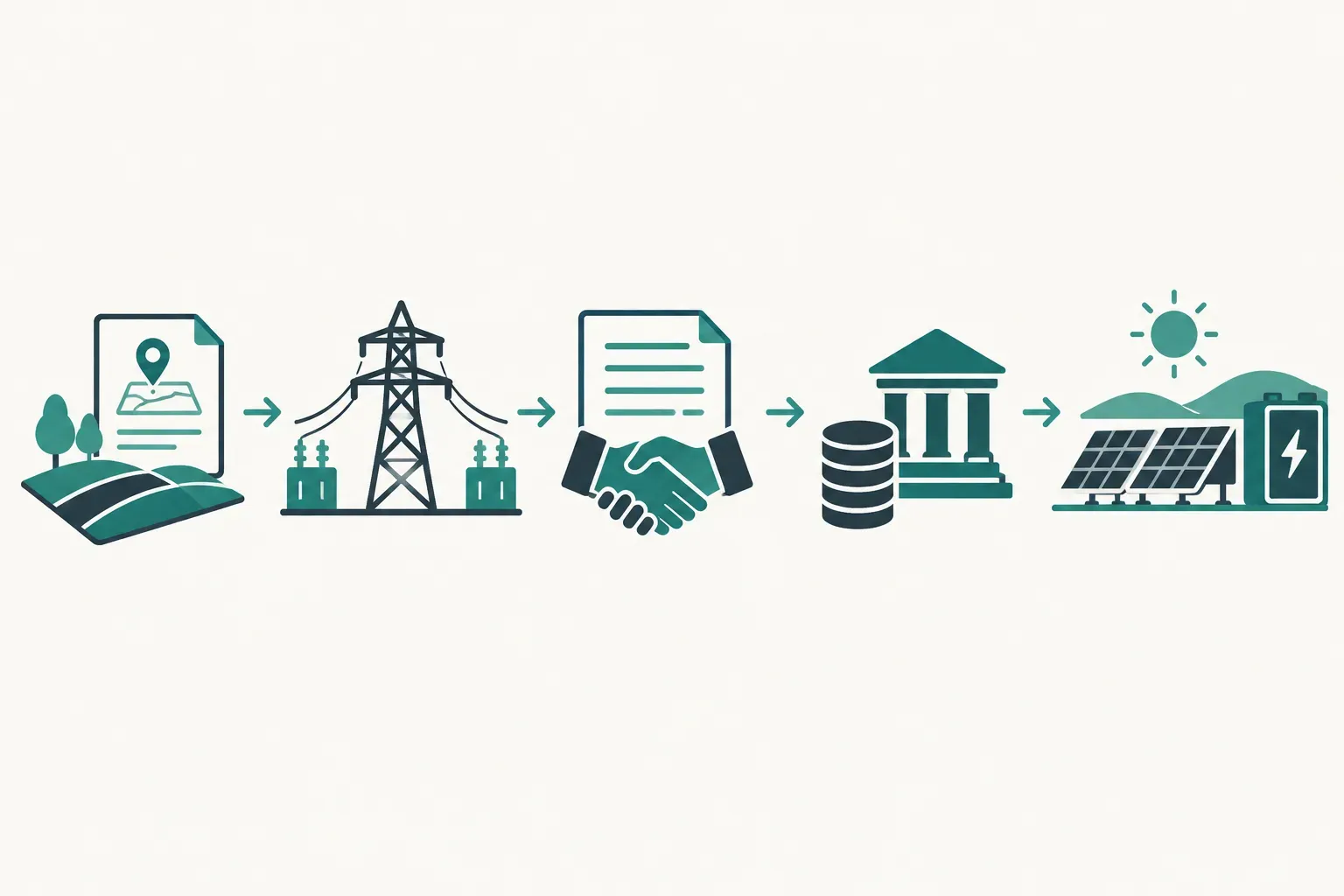
Give investors the same current documents and assumptions across the data room:
For a solar-plus-storage project, show investors how a late load ramp or a higher interconnection bill affects cash flow. Put the remedies in the model and contracts alongside the expected renewable output.
Early work may need development capital while permits and grid rights remain open. Construction funding becomes easier to arrange once costs, counterparties and connection dates take shape. Debt providers and infrastructure equity investors will look at contracted cash flow, operating risk and downside protection. Buyers can help by aligning contract milestones with funding milestones; a letter of intent cannot fund construction. Apply the same renewable energy project finance discipline to the grid and storage components as to generation.
Zero Circle helps enterprise teams and sponsors prepare renewable supply projects for financing. Project scoring, standardized data, investor matching and capital structuring support help them approach partners whose mandates fit the geography, deal size and risk. Sponsors still have to resolve permits, grid access and credit issues. For the buyer's perspective, see energy transition financing for corporates.
For a data center, renewable procurement works when grid capacity and contracted generation arrive on time, with a funded plan for uncovered hours. Annual certificates support a procurement claim, but they cannot supply a constrained site or guarantee clean power hour by hour. If your enterprise needs to finance a PPA-backed generation or storage project, Zero Circle can help organize its fundability data, shape the capital structure and reach investors who fit the deal.
Yes. Data centers can procure renewable electricity through grid arrangements, power purchase agreements and on-site generation, with storage helping shift some supply across hours. Because wind and solar output varies, operators still need a plan for unmatched hours and reliable grid service or other backup.
There is no single meaningful count without defining “powered by”: annual certificate matching, hourly clean-energy matching and direct physical supply measure different things. A reported renewable procurement percentage does not establish how many facilities run on renewable electricity every hour.
Many do purchase renewable power or its attributes, but an always-on facility cannot assume variable wind or solar output matches demand every hour. Grid connection delays, site constraints and the cost of firming supply can also slow projects. The practical answer is to combine credible renewable contracts with deliverability and reliability planning.