

White-Label Climate Platforms for Enterprises
Evaluate white-label climate platforms for enterprises by comparing brand control, project diligence, investor fit, governance and finance workflows.

– 8 min read
Evaluate white-label climate platforms for enterprises by comparing brand control, project diligence, investor fit, governance and finance workflows.

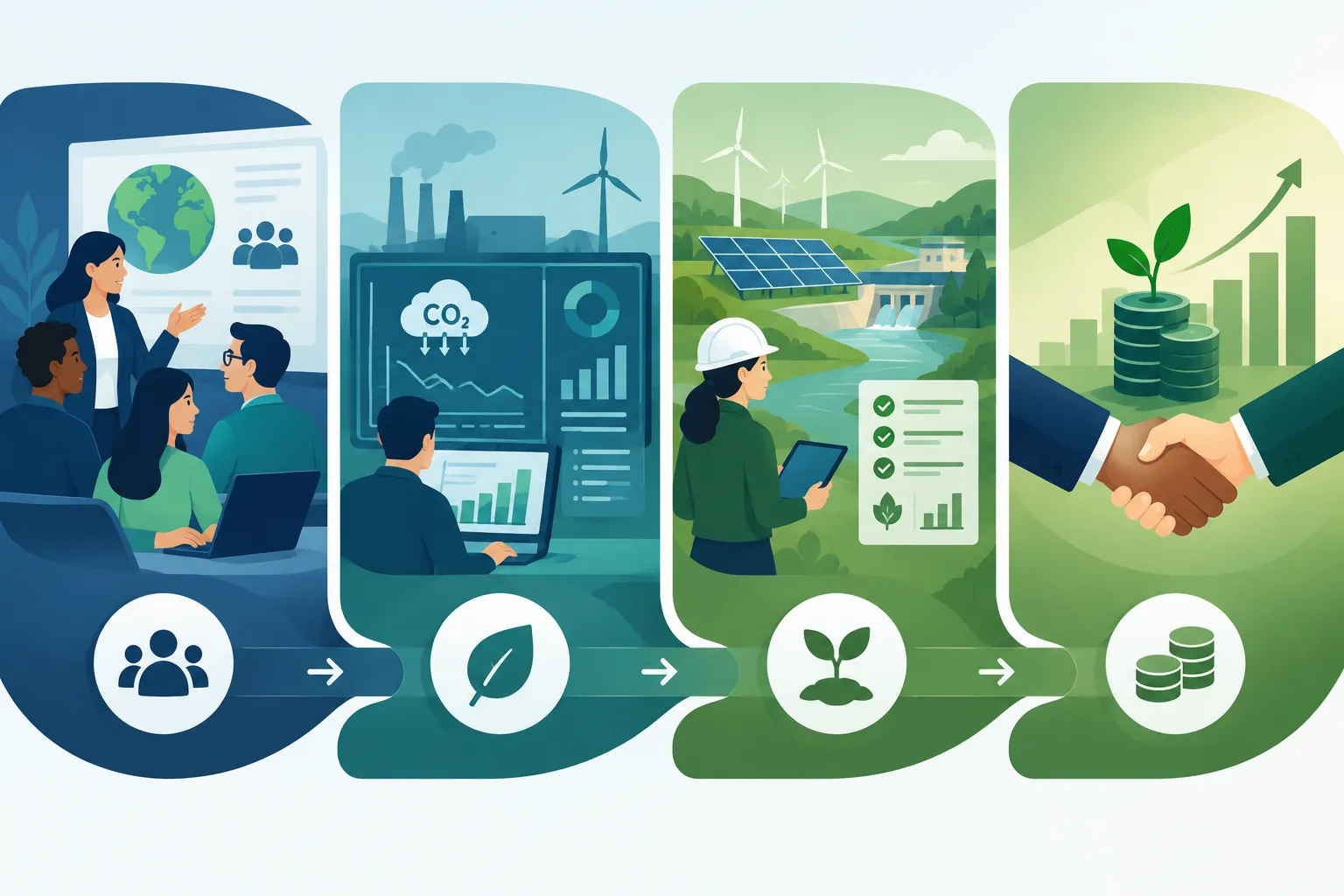
White-label climate platforms for enterprises let teams offer a branded climate program without developing the software themselves. Before choosing one, decide what users need to accomplish. Employee participation, emissions reporting and infrastructure finance require different workflows, even when they share a branded portal.
Start with the outcome you need: participation, defensible emissions information, funding for a defined project or access to suitable capital partners. Then assign ownership of the customer relationship, climate claims and any movement of funds.
With white labeling, a provider supplies technology or services that an enterprise presents under its own identity. Your company may control the logo, domain, messaging and customer journey; the provider may run some or all of the platform. The contract defines where that control begins and ends.
One branded entry point might invite employees to act, display operational emissions data, present projects for support or route eligible parties into financing. For each function, name the intended user, the action you want them to take and the evidence you will need afterward.
Model | Primary user and job | Evidence the buyer needs | Boundary to respect |
|---|---|---|---|
Employee climate engagement | Staff learn, participate or contribute to an initiative | Participation definitions, campaign records and claim approvals | Participation is not an emissions reduction by itself |
Carbon accounting and reporting | Sustainability teams collect activity data and calculate inventories | Data lineage, calculation methods and review history | A branded dashboard does not make an inventory auditable |
Project support or funding | Enterprises and project sponsors present initiatives and seek support | Project identity, readiness, use of funds and outcome evidence | Project visibility is not proof of financial suitability |
Climate project finance and capital access | Project owners and capital providers assess a prospective transaction | Standardized project information, mandate fit and diligence materials | Investor matching is not the same as an investment offer or execution |
You can combine models, though a single supplier may not cover every layer. A workforce program calls for engagement design and consent. Financed decarbonization also needs treasury, legal and project-finance teams at the buying table.
If financing is the objective, start with the financing choices available to corporates before choosing a user interface.
Measure each function on its own terms. For engagement, define active users and completed actions. For accounting, show data completeness, methodology and corrections. For projects, record readiness milestones, funding needs and progress with qualified capital partners. Combining those measures into a single “impact” number requires a defensible basis.
A logo tells you little about how the service operates. Ask the provider to walk through the entire journey, including what users see and receive after submitting data or expressing interest.
Put the domain, brand identity, copy, transactional emails and customer support replies on a responsibility sheet. A financing or investment service may require the provider's name to appear at specific points. Include an exit plan for branded materials, user accounts and past communications in the contract.
In a multinational enterprise, assign approval for local-language claims. Business units may need room to tailor the experience, but they should use consistent disclosures and project descriptions across regions.
Map the data each party enters, sees, edits and exports. Keep employee information, organizational emissions data, project documents and investor information in separate categories on your requirements sheet. Give project teams, sustainability, finance, legal and external counterparties access according to their roles. Request an export of your records and a walkthrough of deletion and retention processes.
List the systems that need to exchange information with the platform: identity management, emissions data stores, project document repositories and finance workflows. Name a system of record and an owner for conflicting entries in each integration. Have the supplier show how staff handle reviews, corrections and support escalations before you commit to a branded launch.
Climate project funding adds financial and claims risk to the software decision. The enterprise, its advisers and the provider need to agree on the diligence and responsibilities involved; these are not features you can assume every platform includes.
The scale of the market makes disciplined project selection worthwhile. In its World Energy Investment 2025 executive summary, the IEA projected:
"Around USD 2.2 trillion is going collectively to renewables, nuclear, grids, storage, low-emissions fuels, efficiency and electrification, twice as much as the USD 1.1 trillion going to oil, natural gas and coal." - International Energy Agency
Have the provider define “verified” at each stage. The starting questions are whether the project exists and its sponsor has authority to represent it. Then establish who reviewed permits, budgets, counterparties, expected cash flows and the basis for projected climate outcomes. Record the reviewer, date and open questions.
Keep project screening separate from technical, legal and financial due diligence. Screening can establish whether a file is complete or fits a mandate; a score can help a team prioritize its work. The underlying documents, assumptions and unresolved risks still need review.
For the financing mechanics behind those documents, see renewable energy project finance basics.
An investor's interest in climate tells you little about whether a deal fits. Compare the project with the investor's mandate, geography, development stage, instrument, ticket size and risk tolerance. Sector fit alone will not resolve a mismatch in stage or structure.
If a platform supports introductions or outreach, decide who approves the project summary and who may contact a capital partner. Keep records of responses and permissions. When a provider describes its investor access, ask whether it means profiles in a database, qualified contacts or active financing discussions.
That distinction also matters when finding climate project investors: a long list is less useful than a short list whose mandates fit the transaction.
A white-labeled project page might provide information, collect contributions, refer interested parties or form part of an investment process. The legal treatment depends on the service involved. For securities, lending or other regulated activity, get advice on the applicable rules and document which authorized entity handles eligibility, disclosures, execution and ongoing obligations. Branding alone does not establish that coverage.
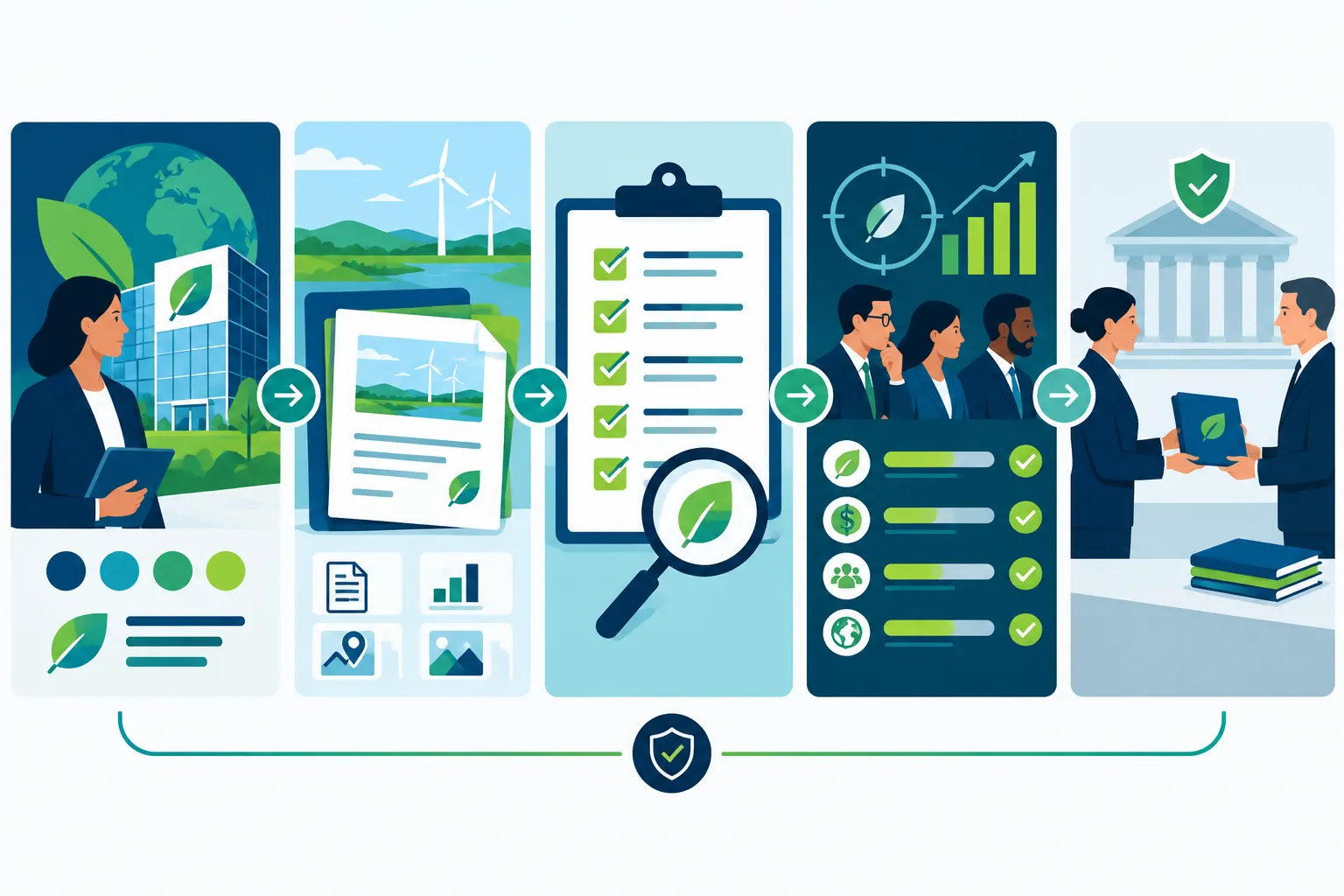
An executive dashboard needs a traceable path from source data to reported outcome. Document the method, approval owner, update schedule and correction process for every material calculation or score. Report operational metrics separately from financed-project outcomes, and label projected and measured results.
Establish a governance map before launch:
This map also makes gaps visible. If no one owns a claim, score or communication, it should not appear in the customer journey.
Give each prospective provider the same scenario, with a user group, a project or program, the decision at hand and the documents available. Include a missing document, a claim that needs correction and a project outside an investor's mandate. The demo should show how staff handle each case.
Ask the provider to show | What a useful answer reveals |
|---|---|
A complete branded journey, including handoffs | Which experience is yours and where the provider takes over |
A sample record with its source and revision history | Whether claims and decisions can be traced |
A rejected or incomplete project | Whether screening exposes gaps instead of hiding them |
A capital-match explanation, if offered | Whether fit uses project and investor constraints |
A data export and an exit scenario | Whether the enterprise can preserve continuity |
A responsibility matrix for any transaction | Who handles advice, eligibility, disclosures and execution |
Agree on the decision a pilot must improve as well as its launch date. A small branded program can show whether people use the experience, though it cannot prove a funding pipeline will close transactions. For a finance pilot, examine the quality of project intake and evidence, then whether relevant counterparties can use that information.
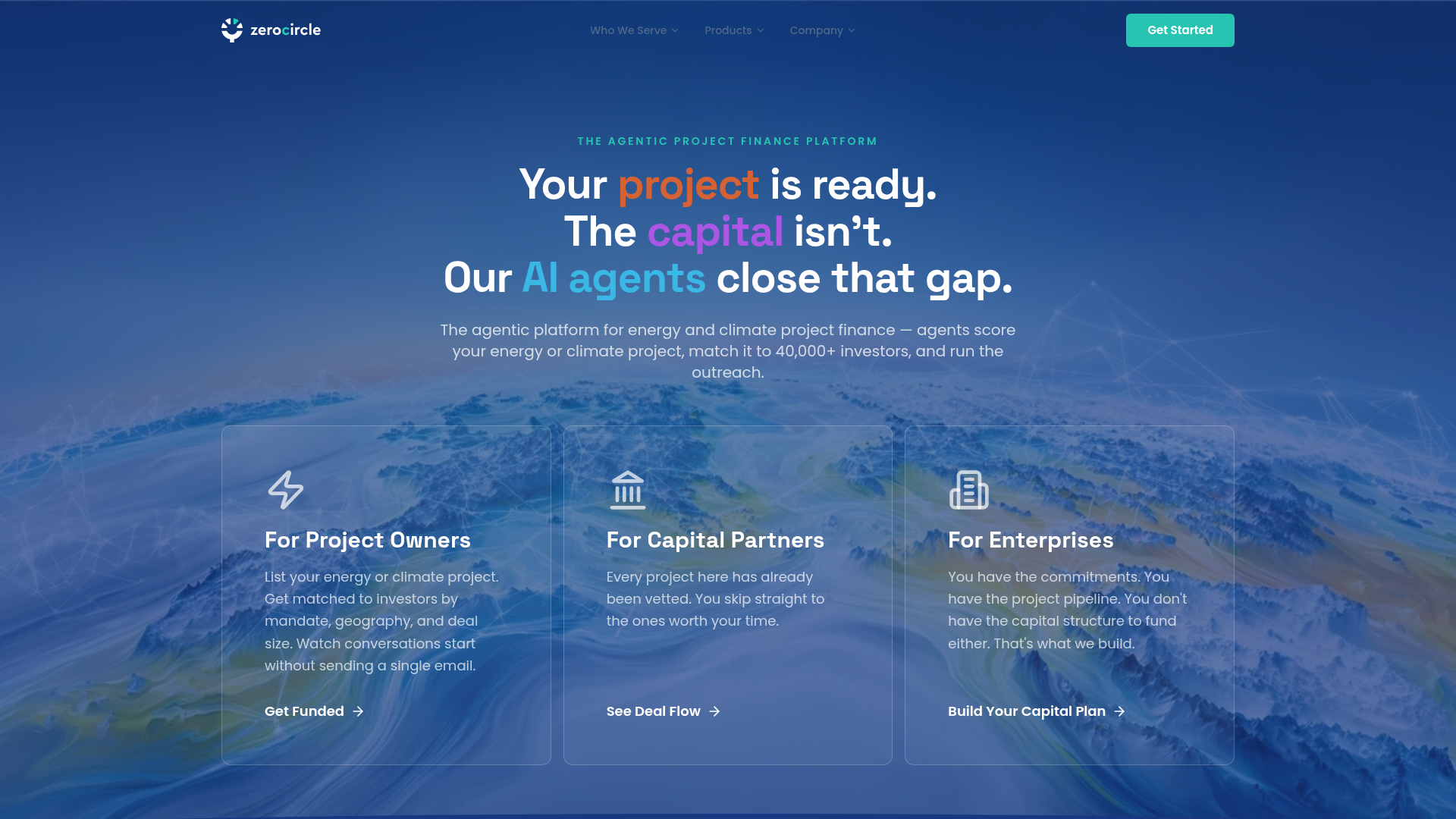
Zero Circle is positioned around energy and climate project finance rather than a generic employee-engagement or emissions-accounting suite. Its ecosystem includes Impact Circle for white-labeled climate action solutions, while its broader project-finance offering connects project owners, capital partners and enterprises around project readiness and capital access. Its AI-driven scoring and investor matching belong to that broader finance offering; do not assume an Impact Circle portal includes those workflows.
An enterprise seeking both a branded climate experience and a route toward structuring or financing projects may find that combination useful. Request a demonstration of Impact Circle, then map the financing work separately to the relevant project-finance workflow and responsible parties. The white-label layer should not be assumed to underwrite projects, hold investor funds or execute regulated investments.
For a program that only needs employee challenges or an emissions inventory, evaluate dedicated tools for those tasks first. The case for Zero Circle is stronger when the underlying enterprise problem is moving an energy or climate infrastructure project from a documented plan toward appropriate capital.
Choose the platform around the decision its users need to make. Brand control, evidence, data ownership, project readiness and financial responsibility all belong in the buying brief. If your mandate includes financing energy or climate infrastructure, explore Zero Circle's branded climate offering alongside its project-finance ecosystem. Bring a real project and its capital needs to that conversation.
White label products are built or operated by one provider and presented under another organization's brand. In an enterprise climate program, branding may cover the interface and communications, while the provider remains responsible for specified technology or services.
There is no useful single price for enterprise climate platforms. Scope the branded experience, implementation, integrations, support, data needs and any separate project-finance work before requesting a quote. A portal for employee engagement and a workflow involving project diligence and capital partners need different budgets.
White labeling itself is a way to present a provider's product under your brand. The legal questions depend on the claims, data and services offered through it. If the journey involves investment or lending activity, assign responsibility for the relevant permissions and disclosures before launch.
An enterprise could present a climate-action portal with its own logo and messaging while a provider supplies the underlying software. Impact Circle is Zero Circle's white-labeled climate action offering; ask to see which parts of the user journey, data and support your enterprise would control.
Enterprises can procure a branded app or portal from a provider, but the contract determines what they actually own. Define the rights to the brand, user relationship, data and exit process, then confirm that the app performs the climate or finance job you need.