

Resilience Infrastructure Pipeline: Debt vs. Equity
Compare debt and equity for a resilience infrastructure investment pipeline, from project readiness and repayment tests to capital stack design.

– 8 min read
Compare debt and equity for a resilience infrastructure investment pipeline, from project readiness and repayment tests to capital stack design.

For a resilience infrastructure investment pipeline, use debt when a project can demonstrate committed cash flow after operating costs and reserves. Use equity to fund development or absorb construction and revenue risk. Many projects need both. A flood barrier's avoided losses, however valuable, cannot repay investors unless someone has agreed to pay for the protection.
Developers can have plenty of promising sites and few transactions ready for capital. For each project, investors need to connect climate performance and delivery risk to a payment mechanism they can underwrite.
Resilience infrastructure helps essential services withstand a shock and recover. Examples include flood-protected substations, distributed power at critical facilities, water systems, cooling and stormwater assets. A project pipeline is a list of proposed works. An investment pipeline gives investors the rights, costs, payment sources and risk information they need to assess each proposal.
In the United States, utilities, local governments and private operators face climate change and extreme weather risks to existing infrastructure. Plans for sea level rise or more intense floods may combine public works, natural systems and clean energy assets. That mix can complicate investment decisions: the owner may pay for protection that benefits several other parties.
Before assigning a project to a capital pool, answer four questions:
A wetland can reduce flooding across a community without earning a user fee. Public funding or an enforceable service or outcome-payment agreement must cover its costs; an estimate of avoided damage is not a receivable.
"241 of the 484 projects were at an early development stage." - CDP, US Infrastructure Opportunities Snapshot 2024
CDP's original project snapshot shows why early-stage development needs its own financing, before projects are ready for loans.
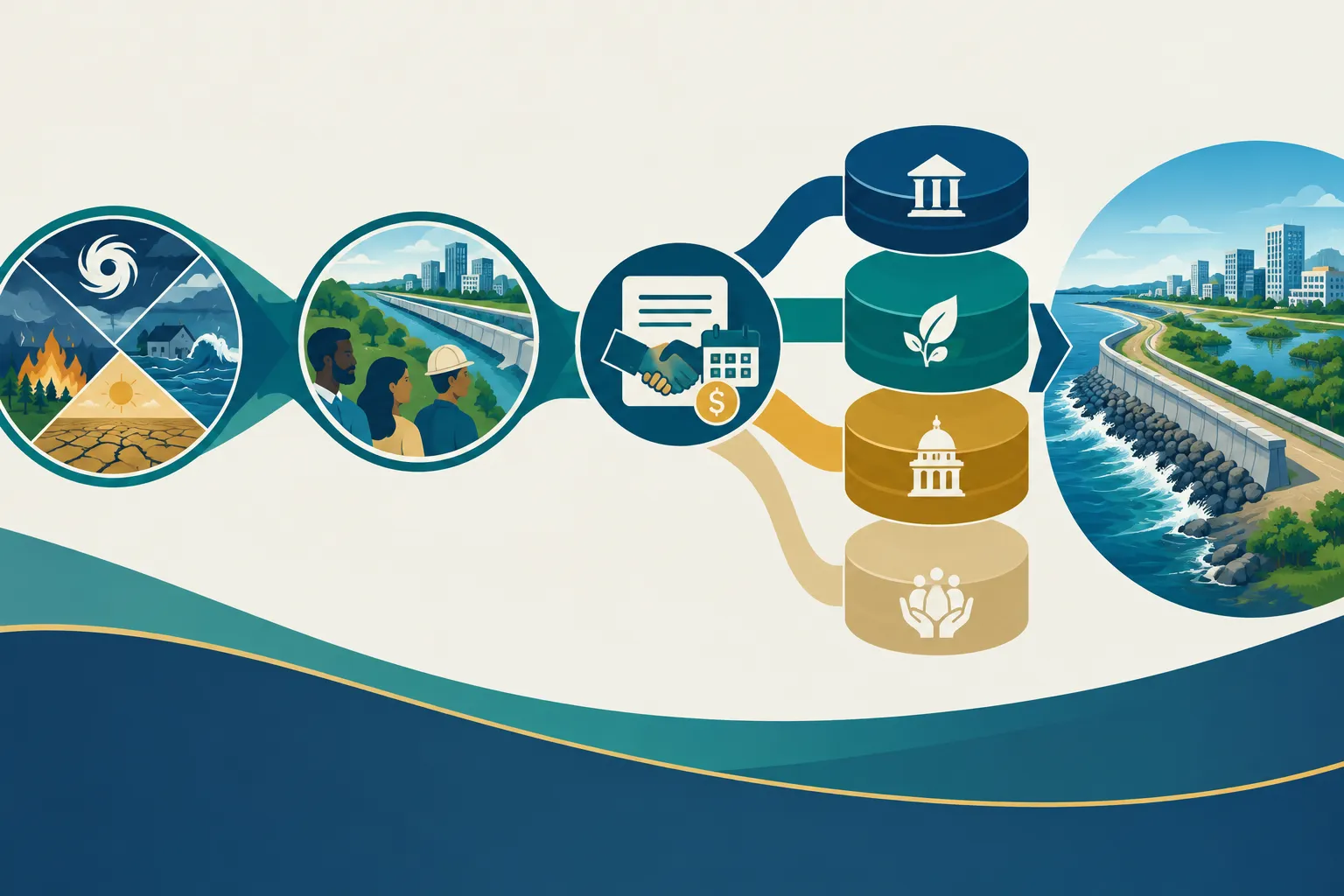
The party receiving a benefit may differ from the one authorized to pay. That distinction underpins adaptation project payment models and risk allocation.
Lenders focus on repayment and downside protection. Equity investors focus on what remains after the project pays its obligations, including its prospects for operation, expansion or sale. Both examine climate hazards, counterparties and execution. Their place in the payment waterfall changes how much loss each can bear.
Decision point | Debt investor: lender or bondholder | Equity investor: sponsor or infrastructure fund |
|---|---|---|
Main question | Will contracted or otherwise dependable receipts pay interest and principal through a downside case? | Does expected residual value justify development, construction and operating risk? |
Cash-flow evidence | Payer credit, enforceable contracts, tariff authority, collection history, operating budget and reserves | Addressable demand, revenue scenarios, margins, capital needs and credible exit or long-term distributions |
Readiness threshold | Typically wants substantially resolved permits, site rights, engineering, contracts and a bankable model before commitment or draw | Can enter during development if milestones, rights and governance make risk assessable |
Downside protections | Security, covenants, debt-service reserves, completion support and step-in rights | Governance, stage-gated funding, preferred returns or negotiated control rights |
Upside and limitation | Contracted return; limited upside and little tolerance for unpriced uncertainty | Participation in upside; dilution and first-loss exposure if the project underperforms |
Best use in the pipeline | Construction or operating assets with a demonstrable repayment source | Origination and development, risk absorption, or the equity portion of a leveraged project |
Corporate borrowers may pledge their balance sheets instead of relying on project cash flow, and strong guarantees can make development-stage debt possible. Some equity investors also require signed revenue contracts before backing construction. Instrument names alone tell you little about a particular investor's terms.
Start with cash left after operating costs, lifecycle maintenance and reserves. Compare it with scheduled debt service in the base case, then model delayed completion, weaker collections, higher maintenance, physical damage and payer default. If the loan depends on avoided disaster losses that no one has agreed to pay, senior project debt is premature.
Lenders also compare the debt tenor with the payment agreement and the asset's life. If the periods differ, they need a credible refinancing or repayment plan. Strong engineering cannot make up for a weak payer or expiring tariff authority.
Equity investors will accept some uncertainty if the project has a credible route from development spending to distributions or sale proceeds. They examine the sponsor's execution capacity, the value of site and contract rights, the development budget, dilution from later rounds and the risk of poor resilience performance. Without a business model, even patient equity has no path to a return.
Development equity can pay for engineering, permits, contract negotiations and early procurement. Each outlay should move a project toward a defined milestone, so investors can tell which opportunities warrant the next round of funding.
Tax equity in energy project finance depends on a tax-benefit structure. It cannot replace development equity across the whole resilience pipeline.
Classify each project by the financing decision an investor can make now. A standardized data room gives investors the same facts and marks preliminary estimates as such.
Gate | Evidence to assemble | Appropriate capital conversation |
|---|---|---|
Screen | Location, hazard and baseline, intervention, beneficiary, indicative costs, potential payer and ownership | Grants, sponsor budget and exploratory equity; identify projects with no payment pathway |
Develop | Site rights, feasibility and design, permitting path, payer authority, draft contract, community impacts and preliminary financial model | Development equity, technical assistance or concessional support |
Underwrite | Independent technical review, executed or near-final commercial agreements, procurement plan, insurance terms, detailed model and downside cases | Senior debt term sheets alongside committed equity |
Close and operate | Final approvals, conditions precedent, funded reserves, construction and operating contracts, monitoring plan | Debt drawdown, equity funding and later refinancing where justified |
Investors may engage before every document is final. Mark each item as available, draft or missing, and name its owner and completion date. If you call a proposal “shovel-ready” without land control, a payer or a construction budget, your capital partner has to do that work.
Keep separate evidence for physical and financial risk. The physical record should show hazard scenarios, design standards, expected service continuity and residual exposure. The financial record needs the payer's authority, sources and uses, contract terms, a cash waterfall and sensitivities. Investors need both.
Teams building the physical-risk track can distinguish grid resilience from reliability when defining an electricity project's performance standard.
First size debt against cash the project or borrower can legally receive. Equity must cover construction exposure, required reserves and the gap between financeable debt and project cost. Keep costs with broad public benefits but no collectible revenue visible as a separate funding requirement.
A practical order of operations is:
Borrowing creates a repayment claim; equity dilutes ownership and takes residual risk; grants do not require financial repayment. Green and resilience bondholders still need repayment. A public-private partnership can allocate delivery and payment obligations, yet lenders must still evaluate the payer's credit.
The payment boundary matters for infrastructure projects that cut carbon emissions while protecting the energy system. Solar and storage at a critical facility may earn contracted energy payments and also provide backup power. Use the contract receipts to assess debt. Account for the continuity benefit separately unless a customer has agreed to pay for it.
Consider a utility that plans to elevate equipment and protect a distribution substation from flooding. Its goal is to keep power available during a specified flood event. Customers and nearby businesses get fewer outages, yet the substation earns no extra revenue simply because a storm causes less damage.
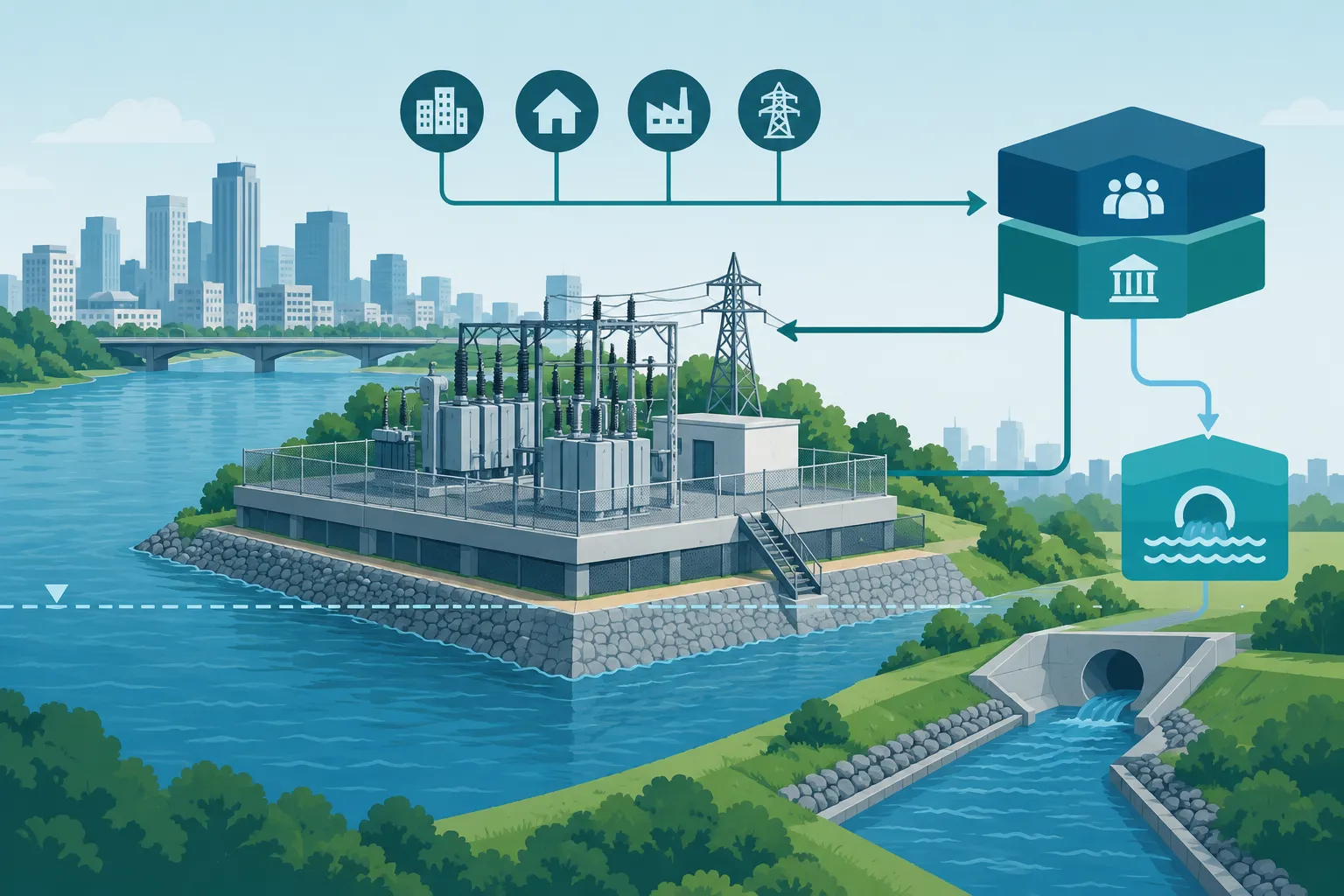
At screening, the utility maps the flood hazard and identifies the equipment, costs and beneficiaries. Development equity or a utility budget could pay for engineering and permits. Before investing, a capital partner would also need evidence of site control and a payment pathway.
The financing route then splits:
Either structure needs engineering for floods beyond the design threshold and for water that the barrier could divert toward neighbors. The financial model needs inspection, replacement, insurance and recovery costs. A lender can size senior debt once the utility documents who pays and who carries those risks.
Project owners should use the same record for every opportunity: geography, sector, stage, capital sought by instrument, ticket size, payment model, counterparty, hazard evidence, rights, permits and the next milestone. Sort the pipeline by readiness so capital partners can screen their mandates without mistaking early concepts for construction-ready deals.
Zero Circle can help when a project has a plausible payer but the documentation and capital strategy sit in different places. Its platform combines standardized project information, fundability scoring, investor matching by mandate, geography and deal size, underwriting support and human-reviewed outreach. The score helps identify gaps and route a deal. Investors must still assess climate performance, payment authority and the underlying documents.
If the project's documents are ready for introductions, the next step is to find climate project investors by fit, not send the same pitch to every lender and equity fund.
Use a payer and readiness test for every project in the resilience infrastructure investment pipeline. Equity can advance development and absorb risk; debt can finance the share backed by durable repayment; public or concessional capital may cover benefits that nobody can bill. Investors can work with that split. Bring a project with a defined payment route and supporting documents to Zero Circle to organize its fundability case and connect with capital partners suited to its stage.
Resilience infrastructure is built or natural infrastructure designed to keep essential services functioning through a shock and support recovery afterward. Flood-protected substations, reliable power for critical sites and stormwater systems are examples. Whether it attracts debt or equity depends on its payer, risks and project readiness, not the resilience label.