
Commercial Solar Incentives: Finance Risks in 2026
Assess solar energy incentives for US commercial projects in 2026: verify credit timing, eligibility, monetization, and a no-incentive financing case.

– 7 min read
Assess solar energy incentives for US commercial projects in 2026: verify credit timing, eligibility, monetization, and a no-incentive financing case.
Solar energy incentives can lift the return on a US commercial project, but a credit in a proposal cannot pay a construction invoice. A sound 2026 investment case identifies the applicable tax rules and the person entitled to each benefit. It also records the construction and in-service dates, then tests the deal without unproven support.
Ownership matters even when the panels go on the same roof. A building owner that buys the system, a developer that leases the roof, and a third-party owner under a power purchase agreement (PPA) may receive different benefits at different times.
Separate each benefit by how the sponsor earns it. A tax credit offsets an eligible taxpayer's federal income tax or can be monetized through an authorized route. A rebate reduces cost once the program awards and pays it. Export compensation, renewable energy certificates (RECs), and bill savings depend on production, tariffs, contracts, and attribute ownership. A loan or commercial property-assessed clean energy (C-PACE) assessment supplies financing rather than an incentive payment.
Item | What belongs in the base case | Main underwriting risk |
|---|---|---|
Federal investment credit | Eligible cost, applicable credit rate, and credible path to use or sell the credit | Wrong regime, date, wage rules, bonus eligibility, or buyer discount |
Federal production credit | Eligible generation and a monetization plan | Output, qualification, and credit-sale risk |
State or utility rebate | Written reservation or award, less any costs and conditions | Funding exhaustion, milestone failure, or payment delay |
REC or export value | Executed offtake or supported tariff assumption | Volume, price, curtailment, and attribute ownership |
Property or sales tax treatment | Jurisdiction-specific tax analysis | Local assessment or procurement rules |
Record each benefit in the year its recipient can use it. A state payment might follow operation, while a tax benefit can change the depreciation basis. If either arrives after closing, the sources-and-uses schedule needs a way to cover the gap.
For new commercial solar, identify the credit before entering a percentage in the model. The clean electricity investment credit (section 48E) generally covers qualifying property placed in service after 2024; a production credit or legacy rule may apply to another project. The IRS's general 48E page still describes the older, longer phaseout. Its later wind-and-solar guidance supplies the timing test for solar. The file needs the governing section, dates, labor records, and support for every bonus claim.
An EPC signature does not establish the tax construction-start date. Keep records of qualifying physical work, invoices, payments, and construction milestones alongside the tax analysis of start and continuity. Commissioning records establish a separate point: when the property was ready and available for use.
The credit rate applies to eligible investment, so separate qualifying property from other spending in the cost schedule. The IRS lists a 6% base 48E credit and an increase up to 30% for facilities meeting prevailing-wage and apprenticeship requirements. Statutory exceptions need their own analysis. The EPC team should collect pay and apprentice records during construction rather than trying to assemble them at commissioning.
Domestic-content and energy-community bonuses each may add 10 percentage points to a qualifying 48E credit, according to the IRS. Equipment origins and location need evidence tied to the actual facility and tax year. IRS Notice 2026-15 addresses a separate issue for facilities starting construction after 2025: prohibited-foreign-entity material assistance. Low-income communities bonus value requires project-specific eligibility and an allocation; a commercial roof does not qualify by default. Keep unsupported bonuses in the upside case.
Tax counsel should model grants, rebates, depreciation, and credit basis together. Applying a credit percentage to the entire EPC budget can overstate the value available to finance the deal.
The 2025 law changed the end date for solar and wind credits under sections 45Y and 48E. IRS Notice 2025-42 ties termination to two facts: an applicable facility is placed in service after December 31, 2027 and construction began after July 4, 2026. A timely start can preserve credit eligibility for a later in-service date if the project meets continuity and other rules. The residential homeowner credit under section 25D has no bearing on a commercial sponsor's 48E eligibility.
For this cutoff, the notice generally requires physical work of a significant nature. A solar facility with no more than 1.5 MW AC maximum net output may use the five-percent cost safe harbor instead. The notice also gives projects a four-calendar-year continuity safe harbor; outside it, continuity turns on the facts and circumstances. When the investment case relies on a timely start, the closing file should contain proof under the applicable test. A permit application or forecast date does not establish that start.
"Physical work of a significant nature begins." - IRS, Notice 2025-42
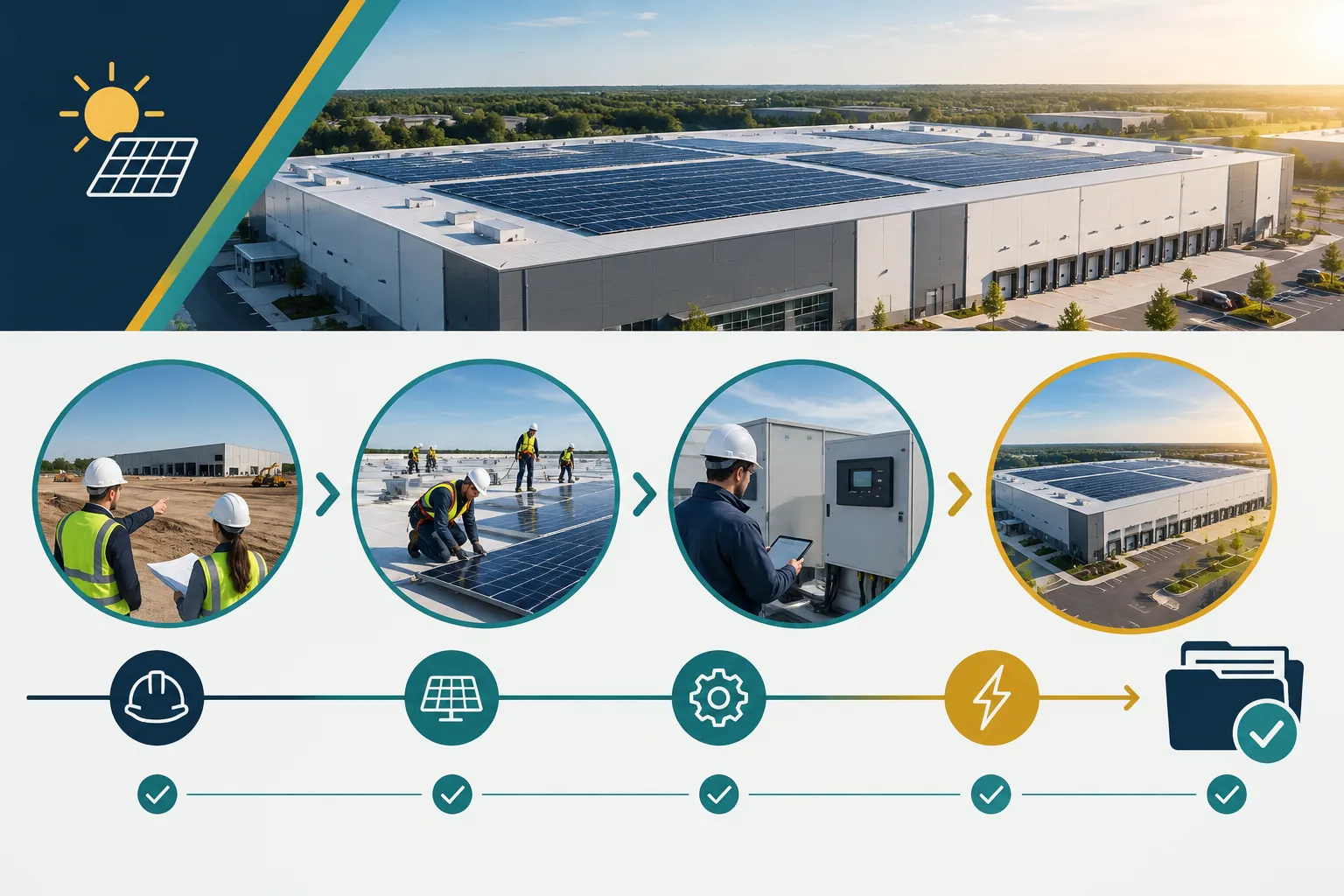
State solar energy incentives vary by jurisdiction, utility, technology, customer class, and project dates. The examples below call for different evidence:
Example, not a nationwide entitlement | Underwriting treatment |
|---|---|
California Self-Generation Incentive Program (SGIP) | CPUC identifies storage incentive categories, but its listed budgets are marked as available through 2025, not a blanket 2026 award. Separate any storage award from solar credit value and underwrite payment only with a current reservation and milestones. |
State REC program | Identify who owns the environmental attributes and whether the project has an award or binding REC contract; do not assume a spot-market price is fixed revenue. |
Utility export tariff | Model imports avoided and exports separately using the applicable commercial rate and interconnection arrangement. |
Confirm the jurisdiction and project start dates against the current program handbook before using a state example. An award may still require equipment, reporting, or operating milestones before payment.
On a commercial building, electricity used on site may save more than exported power earns. Interval load data, a production forecast, and the tariff show how much solar output offsets purchases. Under third-party ownership, the host can pay less for power while the equipment owner claims applicable tax benefits. The PPA should say who gets the RECs and other attributes.
An eligible credit may still leave a cash gap at closing. The finance model needs to name the tax owner, the claimant, and the route by which proceeds reach the project company.
Route | Potential user | Cash-flow and execution question |
|---|---|---|
Own tax capacity | Taxable owner with sufficient eligible liability | Can it use the credit when claimed, considering tax limitations? |
Transfer | Eligible credit seller and unrelated buyer | What net price, indemnity, diligence, registration, and payment date are contracted? |
Elective pay | Eligible tax-exempt or governmental claimant where the law permits | Is the claimant an eligible entity, and when will the filing result in payment? |
Tax equity | Sponsor that structures a partnership or lease with a tax investor | What value remains after investor return, fees, basis adjustments, and closing conditions? |
Under the IRS transferability rules, an eligible taxpayer sells a credit to an unrelated buyer for cash, registers the project, and makes the election on a timely return. Elective pay follows different rules. It generally serves designated applicable entities, with limited exceptions for other credits, so a taxable commercial sponsor cannot assume it will receive a federal check. Buyer diligence, registration, payment timing, and recapture risk shape the sale price and closing schedule. Depreciation remains with the project owner, not the credit buyer.
Suppose a project costs $10 million to install. For this hypothetical cash bridge, the sponsor models $3 million in federal-credit proceeds, $0.5 million in state support, and $6 million of committed debt. No credit rate or award is implied by those assumptions. The example leaves out fees, taxes, depreciation, financing carry, and operating cash flows to show the funding gap on its own.
Hypothetical funding at closing | Incentive case, if proceeds are available at closing | No-incentive case |
|---|---|---|
Installed cost | $10.0m | $10.0m |
Committed debt | $6.0m | $6.0m |
Federal-credit proceeds | $3.0m | $0 |
State support | $0.5m | $0 |
Sponsor equity required | $0.5m | $4.0m |
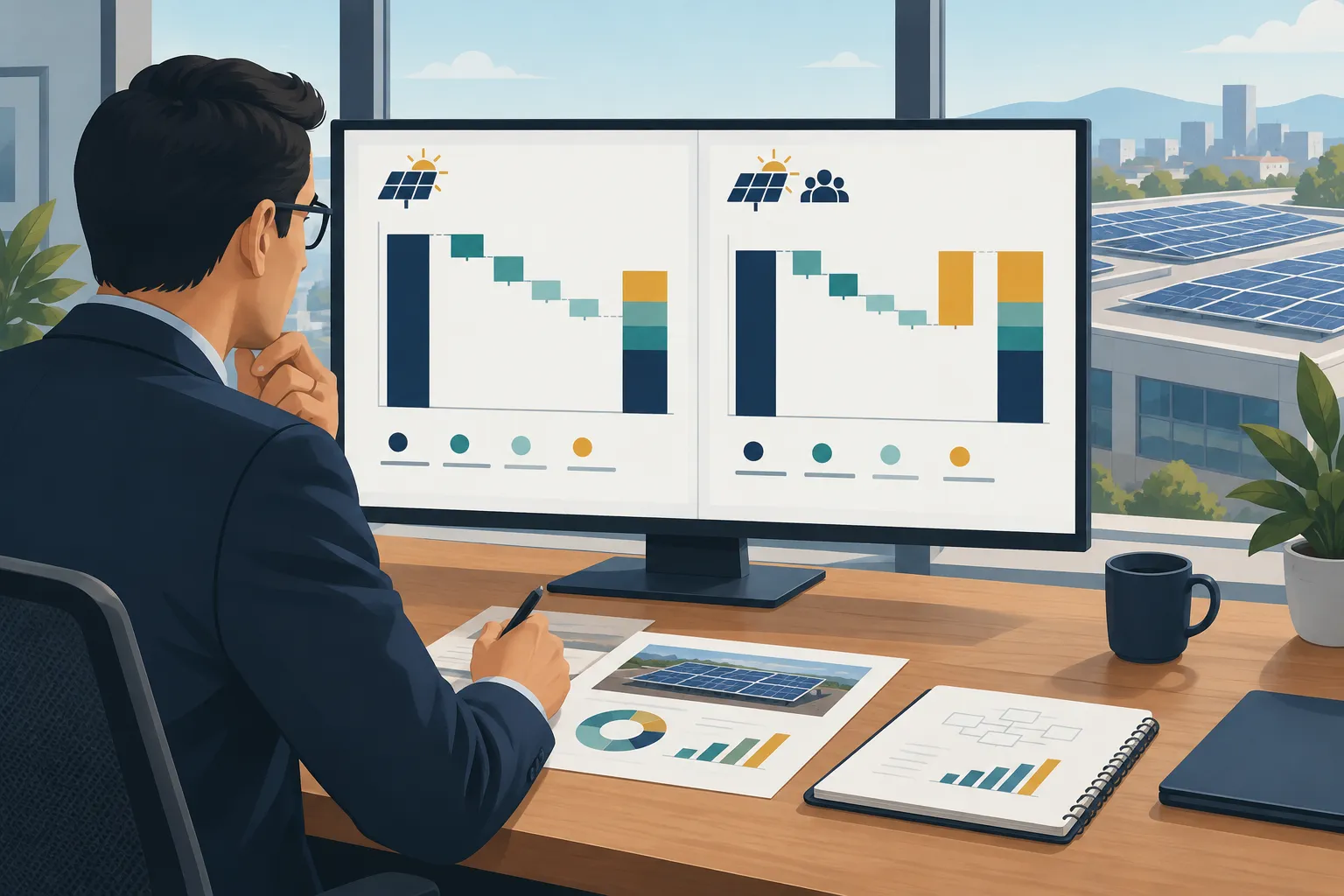
Without the assumed incentives, the sponsor needs another $3.5 million of equity. Even with them, a credit sale that closes after construction draws may call for bridge capital, interest, and extra liquidity. Rerun debt-service coverage and equity returns using the actual tariff and production forecast. If the project cannot cover that gap or service debt without an unawarded subsidy, the finance plan needs work before the committee commits.
The solar farm financing capital-stack guide covers the debt, equity, and other funding choices that follow from that stress test. For building owners, site control, roof condition, load, and ownership structure need to be resolved before applying the same logic to rooftop solar.
Give each benefit a person responsible for its evidence. In the deal room, label its status “claimed,” “documented,” “awarded,” or “contracted.” A claimed amount should enter closing sources only when the relevant proof and cash route exist.
For a 2026 commercial solar deal, include an incentive in the base case only when the team can support its eligibility, timing, recipient, and cash route. Finance the gap without unawarded or unsold value. Zero Circle helps sponsors organize the evidence into reviewable project data, score fundability, and find investors whose mandates fit the geography and deal size. Its human-reviewed outreach can start those financing conversations sooner; tax eligibility and closing still need project-specific professional and counterparty diligence.