Pollution, Politics, and Public Health: Cutting Through the Climate Confusion
Discover the urgent need to prioritize health over politics in the climate crisis, focusing on real solutions to combat pollution and protect public health.
Toxic pollution is the most immediate climate-linked threat to health: air pollution killed 8 million people in 2021, and heat-related deaths among people over 65 rose 70% in two decades. Politics and misinformation stall progress, so the way forward is to focus on health, demand evidence, prioritize real solutions, protect the vulnerable and hold leaders accountable.
"No pollution is good pollution." This simple truth should unite us, yet today, the climate conversation is a battleground of confusion, fear, and division. As we navigate social media storms, political posturing, and headlines that swing between doom and denial, it's easy to lose sight of what truly matters: our health, our environment, and the facts.
Let's cut through the noise and explore what pollution, politics, and public health truly mean for our future—and why clarity is more urgent than ever.
Download the full whitepaper for a deep dive into the data, arguments, and solutions:
The environmental movement began with explicit, tangible threats: rivers on fire, toxic smog, and children poisoned by lead. Early victories—like the ban on CFCs and the shift to unleaded gasoline—proved that focused action could heal wounds. But somewhere along the way, the narrative changed. Today, the climate debate is muddied by:
Politicization: Environmental issues have become identity markers, weaponized by politicians and pundits.
Media Sensationalism: Headlines chase clicks, amplifying fear or skepticism, rarely nuance.
Celebrity Alarmism: Hollywood often issues exaggerated or inaccurate warnings about disasters, which can damage its credibility.
Scientific Contradictions: Conflicting reports and accusations of data manipulation have eroded public trust.
The result? A public left wondering what to believe, whom to trust, and—most dangerously—whether to care at all.
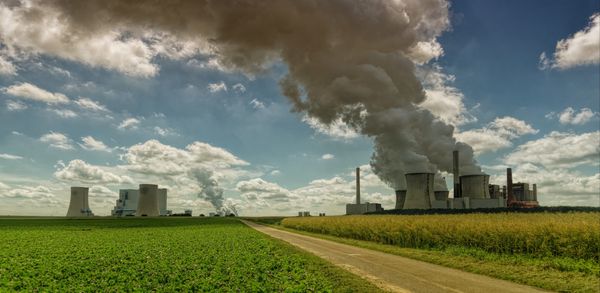
Pollution: The Real and Present Danger While debates rage over CO₂ and global warming, the most immediate threat is often overlooked: toxic pollution. Pollution—both natural and artificial—directly harms human health, causing cancers, asthma, congenital disabilities, and even altering our DNA.
Asthma, cardiovascular disease, and chronic bronchitis are on the rise, especially in cities where heat and pollution combine to create deadly conditions.
COVID-19: A Natural Experiment During the global lockdowns, when cars vanished from roads and factories fell silent, smog cleared—but CO₂ levels didn't drop as expected. This paradox highlights the complexity of our environmental crisis: natural sources, such as volcanoes, wildfires, and oceanic emissions, are significant contributors, often surpassing human impact. This raised critical questions about the relative impact of human vs. natural emissions—and the complexity of climate systems often oversimplified in mainstream narratives.
Climate Change and Public Health: The New Crisis
Climate change is no longer a distant threat; it is a pressing reality. It is a public health emergency. Extreme weather, rising temperatures, and worsening air quality are already affecting millions.
Key Health Impacts
Heatwaves: More frequent, more intense, and deadlier—especially for the elderly, children, and those with chronic illnesses. Emergency room visits for heat-related illnesses, kidney disease, and infectious diseases spike during heatwaves.
Respiratory Issues: Rising temperatures increase ground-level ozone and wildfire smoke, triggering asthma attacks and reducing lung function.
Mental Health: The stress of living through disasters, displacement, and uncertainty is fueling a parallel crisis in mental health.
The Politics of Pollution: How We Got Stuck Why, despite overwhelming evidence, does progress stall? The answer lies in the toxic mix of politics and misinformation.
How Politics Clouds the Issue
Regulatory Whiplash: Policies Shift with Elections, Making Long-Term Planning Difficult.
Global Disparities: Developed nations tout emission reductions, while most of the world's population still relies on polluting fuels and lacks basic standards.
Media and Celebrity Influence: Sensationalism and doomsday scenarios—often propagated by celebrities—have sometimes unintentionally fueled division and skepticism.
Manipulated Narratives: Accusations of data manipulation and conflicting scientific claims fuel distrust, making it easy for vested interests to delay action.
What Actually Works? Lessons from History Despite the confusion, history offers hope. When the focus is on tangible, immediate threats to health, real progress happens:
Banning Leaded Gasoline: Directly reduced child lead poisoning and improved public health.
Phasing Out CFCs: Led to the recovery of the ozone layer—a rare environmental success story.
Clean Air Act: Reduced smog and saved lives in cities around the world.
These victories were won not by chasing abstract threats, but by targeting specific, measurable pollutants—and by building public consensus around health, not politics.
Cutting Through the Confusion: What Should We Do Now? The path forward requires clarity, courage, and cooperation. So how do we move forward from confusion to clarity, from division to solutions?
Focus on Health, Not Hysteria Frame environmental action as a fight for human health and longevity, not just planetary survival. Communicate the direct, daily impacts of pollution—cancer, asthma, lost years of life—not just distant climate scenarios.
Demand Evidence, Not Alarmism Insist on transparency and integrity in science and reporting. Challenge sensationalism, whether it comes from the media, politicians, or celebrities.
Prioritize Real Solutions Switch to renewable energy and enforce strong air quality standards. Invest in clean transportation, distributed energy, and responsible battery storage. Support global efforts to bring clean energy and pollution controls to developing regions.
Protect the Vulnerable Recognize that pollution and climate change hit the poor, the young, and the elderly hardest. Tailor solutions to address these disparities—clean household energy, urban greening, and healthcare access.
Hold Leaders Accountable Advocate for robust regulations on emissions and toxins—and resist efforts to weaken them. Push for integrated, holistic action that addresses both climate change and health, rather than piecemeal fixes.
The Bottom Line: We're Not Killing the Planet—We're Poisoning Ourselves
Earth has survived asteroids, supervolcanoes, and extinctions. It will heal, with or without us. The real question is: Will we act in time to save ourselves?
"To the environmentalists, change your argument: we aren't killing the earth, we are killing ourselves, that is the fact. To the nay-sayers, stop fooling yourselves: our longevity is declining, asthma and diseases overwhelm our society, your children's DNA is being altered."
This blog only scratches the surface. For a comprehensive analysis—complete with data, case studies, arguments, and actionable recommendations—download the full whitepaper here:
Let's move beyond confusion and division. Let's demand solutions that protect our health, our children, and our shared future. No pollution is good pollution—and that's one truth we can all stand behind.
Frequently asked questions
Why does the article focus on pollution rather than only CO2?
While debates focus on CO2 and global warming, toxic pollution is the most immediate and often overlooked threat. Air pollution killed 8 million people in 2021, with the burden falling hardest on women, children and the poor in low- and middle-income countries.
How is climate change a public health issue?
Extreme weather, rising temperatures and water scarcity directly affect health. Heat-related deaths among people over 65 have risen by 70% in two decades, and 37% of these deaths are linked to human-driven climate change.
What did COVID-19 lockdowns show about pollution?
When cars vanished from roads and factories fell silent, smog cleared, but CO2 levels did not drop as expected. Local pollution and global CO2 respond differently.
What should we do now?
Focus on health rather than hysteria, demand evidence rather than alarmism, prioritize real solutions like renewable energy and strong air quality standards, protect the vulnerable, and hold leaders accountable.