
Long-Duration Energy Storage Funding for Developers
Explore long-duration energy storage funding for developers, from grants and strategic equity to contracts, tax credits and project debt in the US.

– 7 min read
Explore long-duration energy storage funding for developers, from grants and strategic equity to contracts, tax credits and project debt in the US.
Long-duration energy storage funding for developers starts with validation capital and shifts toward asset financing once a buyer commits to paying for the service. Early grants and corporate equity can pay for validation; construction debt usually needs a defined asset, a buildable plan and cash flows that survive a lender's downside case. Ask which risk the next dollar will remove before choosing whom to approach.
For a US sponsor, that means separating capital raised by the technology company from financing raised for the project. A strong prototype and a large market do not automatically make a first commercial plant bankable.
"DOE defines LDES as storage systems capable of delivering electricity for 10 or more hours in duration." - U.S. Department of Energy
The DOE briefing below discusses selected demonstration projects. It illustrates the role of public support in proving systems, not a current application opportunity.
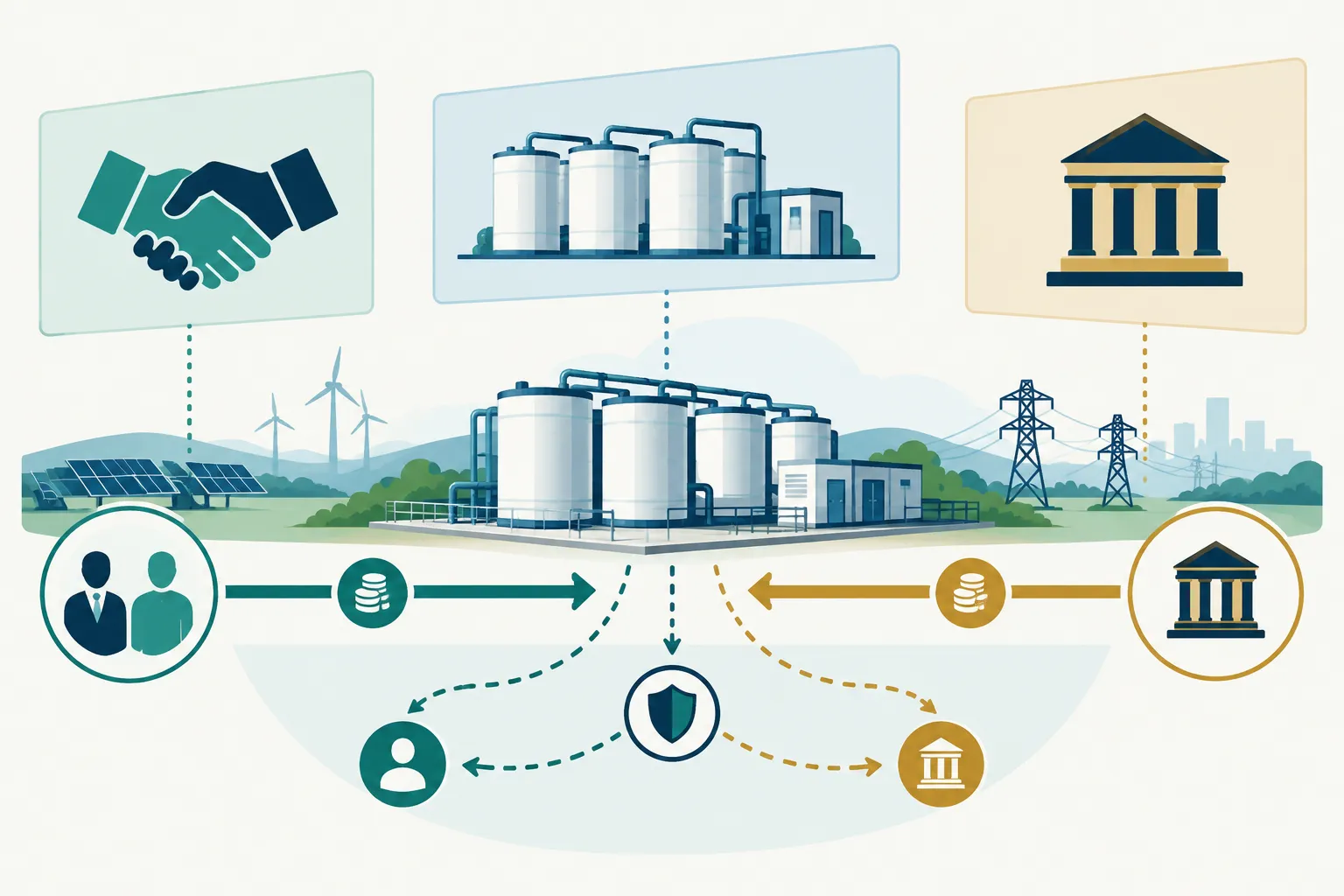
A technology company can raise venture or strategic equity to develop intellectual property, hire a team and improve manufacturing. An individual storage project needs money for its site, equipment, interconnection, construction and operating reserves. Its lenders expect repayment from that project's contractual and operating cash flow, rather than from the promise of future product sales.
The distinction affects both pitch and paperwork:
Funding question | Technology-company capital | Project-level capital |
|---|---|---|
What is being financed? | Product development, demonstration capability and company growth | A defined facility with its own cost, schedule and revenue plan |
Main risk being priced | Technology, market adoption and corporate execution | Construction, performance, counterparties and cash-flow volatility |
Typical providers | Venture investors, strategic investors and research funders | Sponsor equity, infrastructure investors, banks, credit funds and eligible public lenders |
Core evidence | Test results, team, intellectual property and commercial pipeline | Site control, permits, interconnection path, contracted revenue, equipment warranties and a financeable model |
A corporate investment can supply the sponsor equity for a project. The project still needs its own documentation, and a project loan is not designed to pay for an open-ended product roadmap.
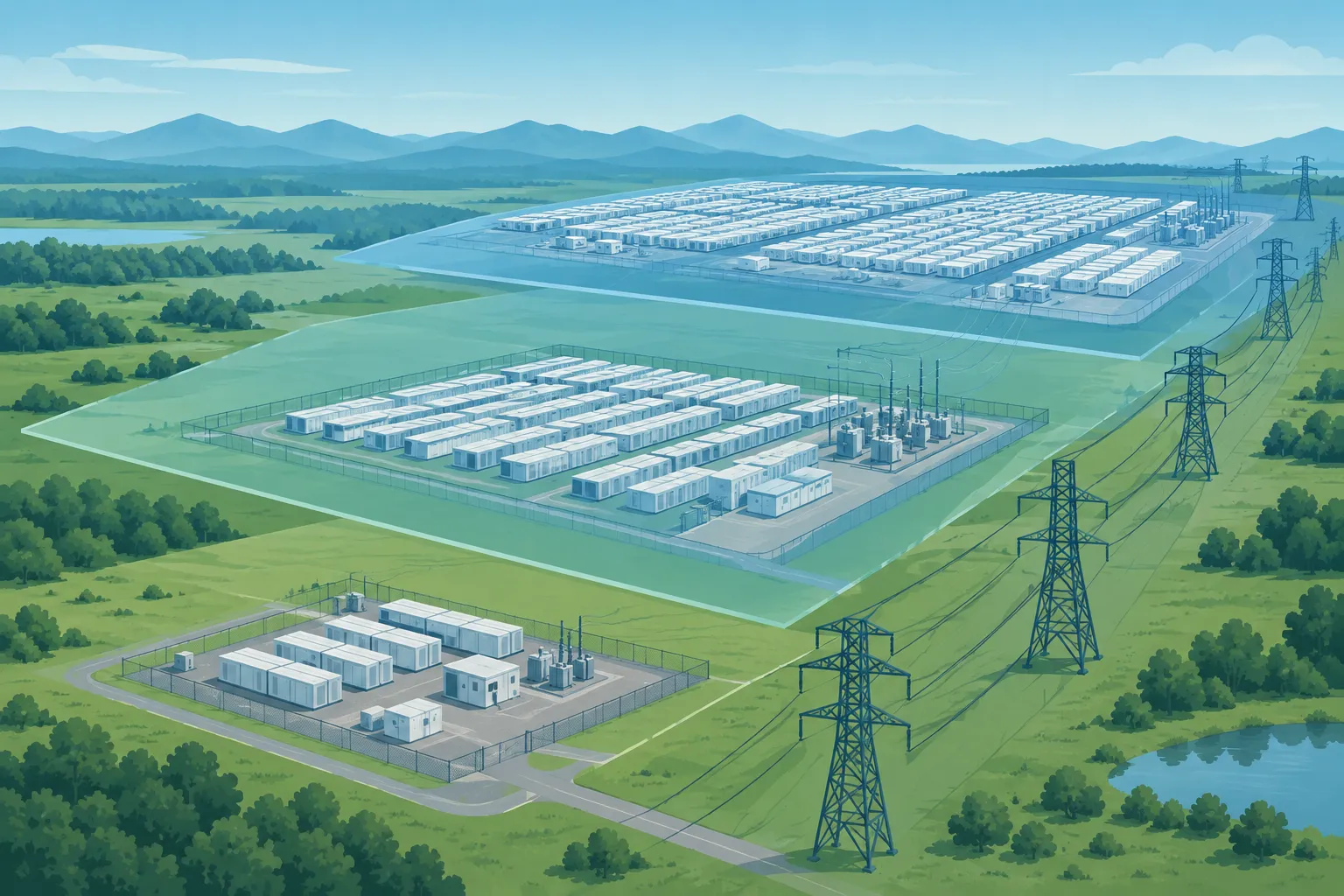
Storage duration alone will not tell an investor how to price risk. Pumped hydro, flow batteries, compressed air and thermal systems have different siting constraints and performance profiles. A grid resource, an industrial heat installation and a resilience asset also need different revenue models. For the wider economics, see Battery Storage Projects Explained.
Stage | Capital most likely to fit | What the next investor or lender needs to see | Main financing trap |
|---|---|---|---|
Demonstration and field validation | Research grants, strategic funding and corporate equity | Independently documented discharge duration, efficiency, degradation or maintenance behavior and safe operation in relevant conditions | Using a grant award as proof that later project revenue is secured |
First commercial asset | Sponsor and strategic equity, customer prepayments where negotiated, public support if eligible and selective structured debt | A creditworthy buyer, fixed scope, credible completion plan, performance guarantees and a funded contingency | Assuming the pilot's unit economics will survive commercial-scale construction |
Repeatable contracted deployment | Infrastructure equity, construction debt, term debt and potentially portfolio financing | Standardized contracts, operating history, repeatable EPC and O&M arrangements, and predictable net cash flow | Applying one site's contract, geography and operating data to an unlike portfolio |
Grant money is most useful for a defined technical milestone that private capital cannot yet underwrite. A strategic investor may care about supply access or a future deployment relationship alongside financial return. Project lenders enter once they can assess payment sources, remedies and downside protection for a named asset.
Design the pilot around the service the eventual customer will pay for. If the promised product is overnight discharge, document delivered power throughout that window, charging requirements, availability and the cost of keeping the system ready. If the use case is industrial heat, measure usable heat at the customer's required temperature and time, not only electricity-in versus electricity-out.
Record the test protocol, instrumentation, ambient conditions, cycling history, faults and repairs. An independent engineer's assessment can make results easier for a future investor to rely on. The demonstration should establish how the system performs against the proposed contract, not only whether it operates.
The first full-scale plant often needs more equity and risk-sharing than a familiar storage design. Sponsors can narrow that gap with staged equipment acceptance, liquidated damages where a capable counterparty stands behind them, insurance where available, clear operating responsibilities and a completion reserve. These tools do not eliminate technology risk; they show who pays when output, schedule or costs miss the plan.
If a strategic customer invests, put the investment and the offtake in separate agreements. Equity upside cannot secure an uncertain payment obligation. A letter of interest also carries less cash-flow certainty than an executed contract with enforceable obligations.
Once a reference asset has operating history, document what can be replicated: bill of materials, supplier terms, installation schedule, commissioning tests, warranties, maintenance plan and the contract form. A portfolio lender will still assess each site's grid connection and customer credit. Standardization saves diligence time, while those local risks remain in the financing case.
Long-duration assets may earn money from energy shifting, capacity, reliability, grid services or process heat. A lender needs to know which payments are committed, who owes them and whether the asset can deliver every service promised in its contracts.
Revenue arrangement | What it offers the sponsor | What still needs underwriting |
|---|---|---|
Tolling or availability agreement | Payments tied to keeping defined capacity available under a negotiated dispatch framework | Performance tests, outages, dispatch rights, deductions and buyer credit |
Utility procurement or long-term service contract | A defined buyer and delivery obligation | Approval conditions, milestone dates, termination payments and change-in-law allocation |
Industrial or enterprise supply agreement | A use case linked to a customer's operational need | Site integration, customer credit, backup requirements and the value of delivered heat or power |
Merchant energy and ancillary services | Upside where market rules reward flexible dispatch | Price scenarios, charging cost, competing resources and revenue cannibalization |
Start the base case with contracted payments. Then stress lower availability, a later commercial operation date, higher charging costs and lower merchant prices. Do not sell the same megawatt-hour's availability to two buyers at once; include the penalties and charging obligations attached to any availability payment.
A contract helps, but lenders also size debt against operating costs, reserves, tenor, tax position and performance risk left with the project company. Uncertain revenue may call for more sponsor equity or stronger contractual protection.
Build an asset-level data room and a short memo stating the funding request, uses and conditions remaining before closing. Investors should be able to assess the project without piecing it together from a technology pitch deck.
Use this package to decide whether to approach a strategic investor, an infrastructure equity provider or a project lender. Without a site or buyer, a sponsor should spend its first outreach cycle building those pieces rather than pitching a leveraged asset. Once the request is defined, finding climate project investors becomes a matter of matching mandate to risk.
Federal support can reduce a specific project's capital cost or help a novel technology reach commercial scale, but an announcement of past awards is not an open application. Separate the mechanisms:
Public support should sit in the sources-and-uses model with its own conditions and timing. If the project can close only after an award or tax-credit monetization, identify that as a closing dependency rather than treating it as available cash today. For the basic distinction between debt and sponsor equity, see Energy Project Finance Explained.
Identify the risk blocking the next class of capital:
Zero Circle helps sponsors organize this work. Standardized project information and AI-driven fundability scoring expose missing evidence; matching by mandate, geography and deal size focuses investor outreach; human-reviewed workflows and structuring support prepare suitable deals for underwriting conversations. Developers still need offtake contracts, engineering work and lender diligence. The platform helps them arrive at those conversations with a clearer financing case.
Fund proof with risk-tolerant capital, secure enforceable payments for the service and seek asset-level debt once the project can be built. Grants can accelerate validation and incentives can improve returns; an unsigned buyer agreement or unpriced performance obligation will still hold up financing. For an asset approaching an investor conversation, use Zero Circle to organize the evidence, find aligned capital partners and structure the raise around risks already addressed.